



Adolescents who use e-cigarettes, tobacco cigarettes, or both (dual users) are more likely than non-users to report misusing prescription drugs, alcohol, and marijuana. Using substances during this developmental time period is related to altered brain development, leading to developmental issues such as poor decision making and emotional regulation problems. This week, ASHES reviews a study by Sunday Azagba that explores e-cigarette, cigarette, and marijuana use among Canadian high school students.
What is the research question?
How is e-cigarette and cigarette use related to past-30-day frequency of marijuana use among high school students?
What did the researchers do?
The researchers conducted an analysis of cross sectional data reported in the 2014-2015 Canadian Student Tobacco, Alcohol and Drugs Survey. They assessed the responses of 23,429 Canadian students grades 9 through 12 about past-30-day marijuana, e-cigarette, and cigarette use. Participants reported the frequency with which they used marijuana in the past-30-days. Participants then responded to two questions about using e-cigarettes and cigarettes at least once in the past-30-days. The researchers used logistic regression analyses to assess whether e-cigarettes, tobacco, or dual use predicted patterns of past-30-day of marijuana use.
What did they find?
Dual users had the highest odds of reporting any past-month marijuana use, compared to non-users, e-cigarette users only, and cigarette users only. Dual users were the most likely to report all patterns of past-month marijuana use and were especially at high risk for using marijuana daily during the past month. (See Figure 1.)
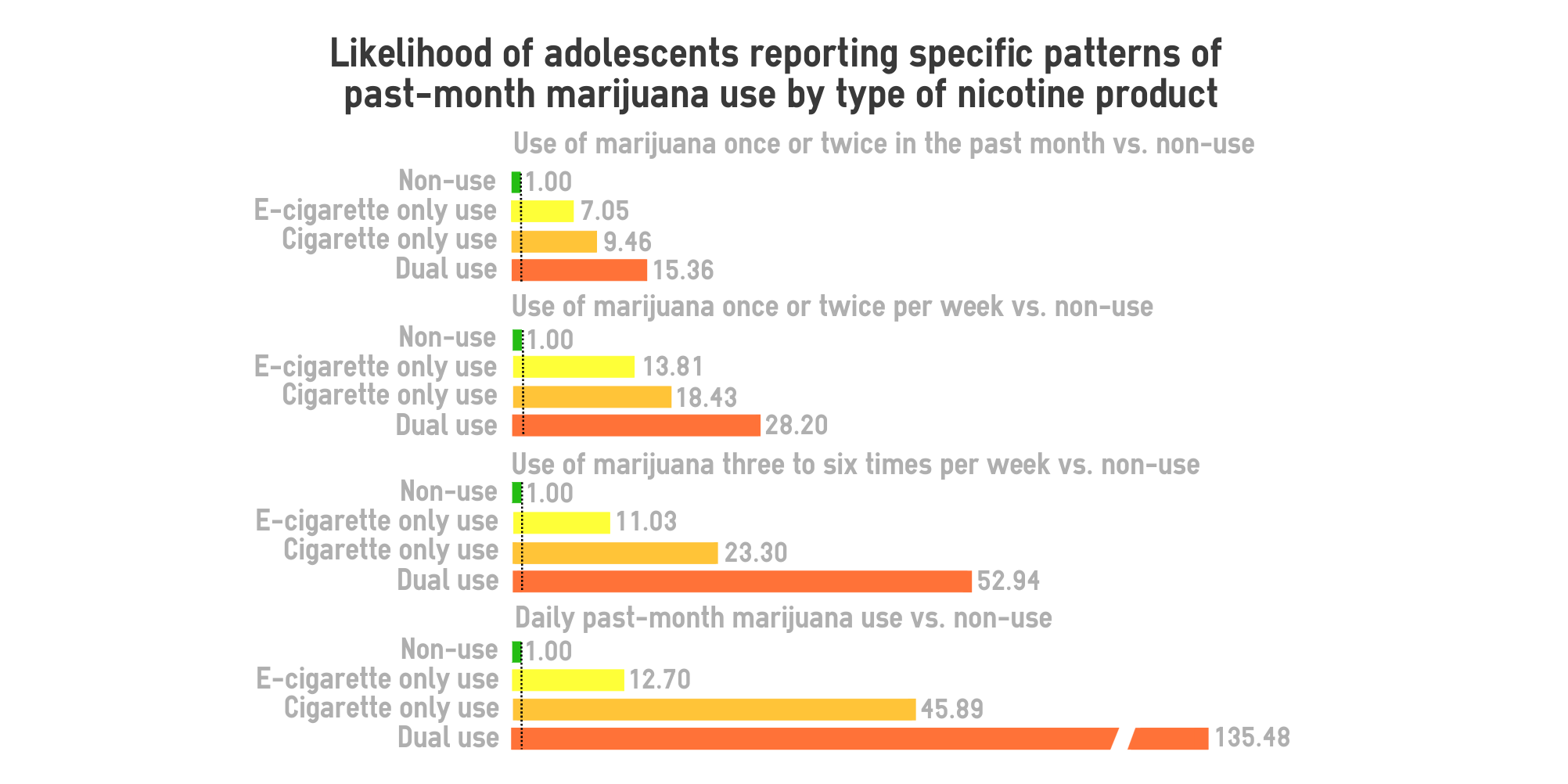 Figure. Odds of reporting a specific pattern of past-month marijuana use among students reporting using e-cigarettes, cigarettes, or both compared to non-users. All numbers represent significant odds ratios. Click image to enlarge.
Why do these findings matter?
Asking kids whether they’re using e-cigarettes (alone in combination with traditional cigarettes) might help identify which ones are at especially high risk for later substance use.
Every study has limitations. What were the limitations in this study?
The researchers did not measure which method students used to consume cannabis-based products, such as eating, smoking, or vaping. Method of consumption might be associated with different tobacco and e-cigarette use patterns.
For more information:
SmokeFree offers tools and tips quitting and maintaining abstinence from smoking tobacco. American Academy of Child & Adolescent Psychiatry offers parents information, tips, and tools about adolescent marijuana use behaviors. For additional tools, please visit the BASIS Addiction Resources page.
— Pat Williams
What do you think? Please use the comment link below to provide feedback on this article.