




Stigma towards smoking can influence health behavior and can lead to worsened or delayed quit attempts. Because of these beliefs, people may blame those who smoke for their own negative health outcomes. For example, individuals who develop lung cancer are often assigned more blame for this outcome if they report smoking. But, what about their family members? This week, as part of our Special Series on Affected Others, ASHES reviews a study by Sarah McCann and Simon Dunne that explored how stigma towards those diagnosed with lung cancer, regardless of whether they smoked, affects family members.
What was the research question?
How do family members of individuals with lung cancer experience stigma?
What did the researchers do?
The research team conducted qualitative interviews with eight family members of individuals with lung cancer: four children, three spouses, and one sibling of a person with lung cancer. During the interview, participants described their relationship to the patient, the diagnosis, and any experiences of stigma following the diagnosis. Two of the authors then reviewed these interviews to identify common themes across interviews.
What did they find?
All eight participants described experiencing significant stigma related to their family member’s lung cancer diagnosis and referenced five general themes: 1) stigma through blame, 2) stigma from healthcare professionals, 3) judgement by association, 4) modern perspectives on smoking that shape stigma, and 5) the management of stigma (see Figure). Many participants reported that when they revealed their family member’s diagnosis of lung cancer to friends or other family, these individuals often asked questions about their family member’s smoking history that carried negative connotations around blame and responsibility. Alarmingly, some participants described experiences where even healthcare professionals acted rudely or were dismissive towards patients following a diagnosis of lung cancer.
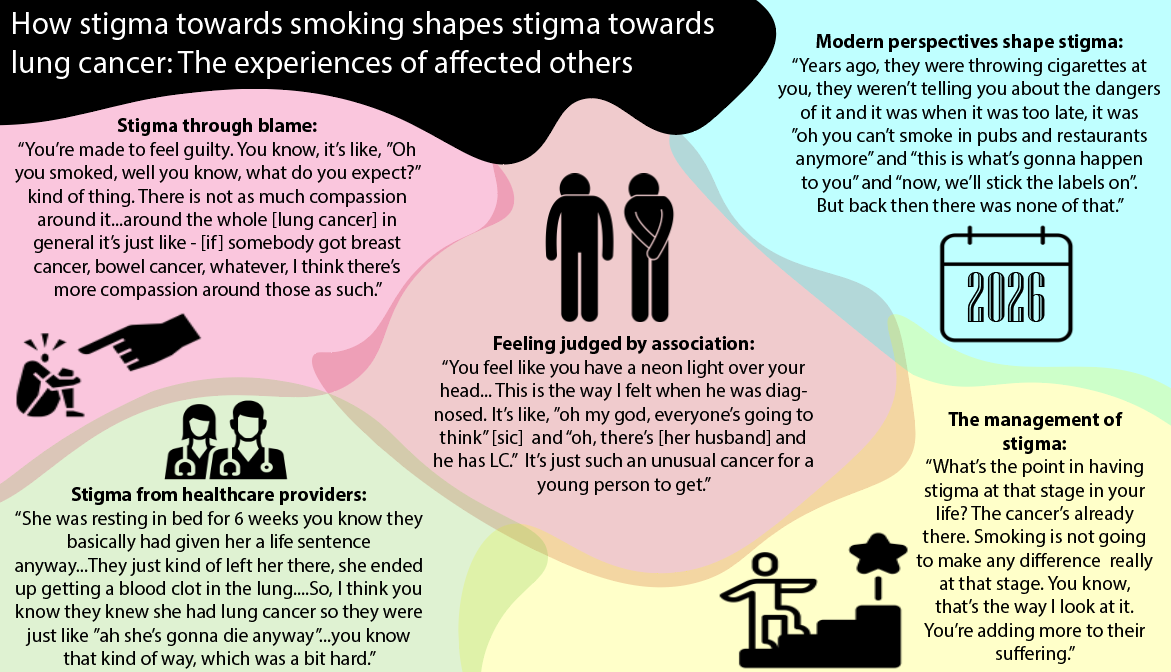
Figure. Displays select quotes from each theme identified through analysis.
Why do these findings matter?
These findings reveal that consequences of lung cancer stigma have ripple effects onto family members. Of particular note is perceived stigma from healthcare providers following a diagnosis of lung cancer, which participants believed manifested through rude or dismissive treatment. This circumstance underscores the need to promote anti-stigma training for healthcare providers, such as the lung cancer stigma intervention outlined by the National Cancer Institute.
Every study has limitations. What are the limitations in this study?
Even by qualitative standards, this study had a small sample size. It also consisted exclusively of individuals in Ireland. These factors could limit the generalizability of these findings. Furthermore, this study did not distinguish the experiences of stigma by the smoking status of either the participants or their family members, so it is unclear how an actual history of smoking relates to lung cancer stigma.
For more information:
Individuals who are seeking to cut back or stop smoking can learn practical tips at smokefree.gov. Others who want to learn more about lung cancer and its association with smoking should engage with the Mayo Clinic. Additional resources can be found at the BASIS Addiction Resources page.
— John Slabczynski
Want CE credit for reading BASIS articles? Click here to visit our Courses Website and access our free online courses.