



During adolescence, youth are having new experiences and adopting new habits, some of which may impact their oral health. Cavities and tooth decay are common oral health concerns among adolescents, which, if left untreated, can lead to infection and even impact school performance and social development. Risky behaviors like adolescent tobacco and e-cigarette smoking could contribute to poor oral health, and the risk might be greater when these substances are combined. However, longitudinal studies are needed to test the association between tobacco use and oral health outcomes among adolescents over time. This week, ASHES reviews a study by Noor Abdulhay and colleagues that did just that.
What was the research question?
Among adolescents, is tobacco use associated with developing oral health problems over time?
What did the researchers do?
The researchers analyzed data from 15,788 adolescents in the longitudinal, six Wave, Population Assessment of Tobacco and Health (PATH) study. Waves 1-6 occurred between 2013-2021. Participants enter the study on a rolling basis – whichever wave they entered was considered their baseline. Via telephone and in-person interviews, participants reported past-month tobacco use and dental health concerns at baseline and subsequent waves. Participants were grouped by type of tobacco use (i.e., combustible tobacco products (CTP) only, e-cigarettes only, dual use, and no-use). Those who reported dental concerns at baseline were removed from the sample. Weighted Cox regression models were used to assess tobacco use and the risk of experiencing oral health problems, while also controlling for covariates like adolescent school level, parent marital status, parent education status, diabetes diagnosis, and tobacco access at home.
What did they find?
Adolescents who reported no tobacco use in the past month were less likely to develop oral health concerns over time, compared to those who used no tobacco products. However, these heightened risks were limited to adolescents who used e-cigarettes only and those who engaged in dual use of e-cigarettes and CTPs (e.g., cigarettes/hookahs) – not those who only used CTPs. Some findings held true even when controlling for covariates. More specifically, adolescents who engaged in past-month dual use were more likely than those who did not use tobacco to develop oral health problems, after adjustment (see Figure).
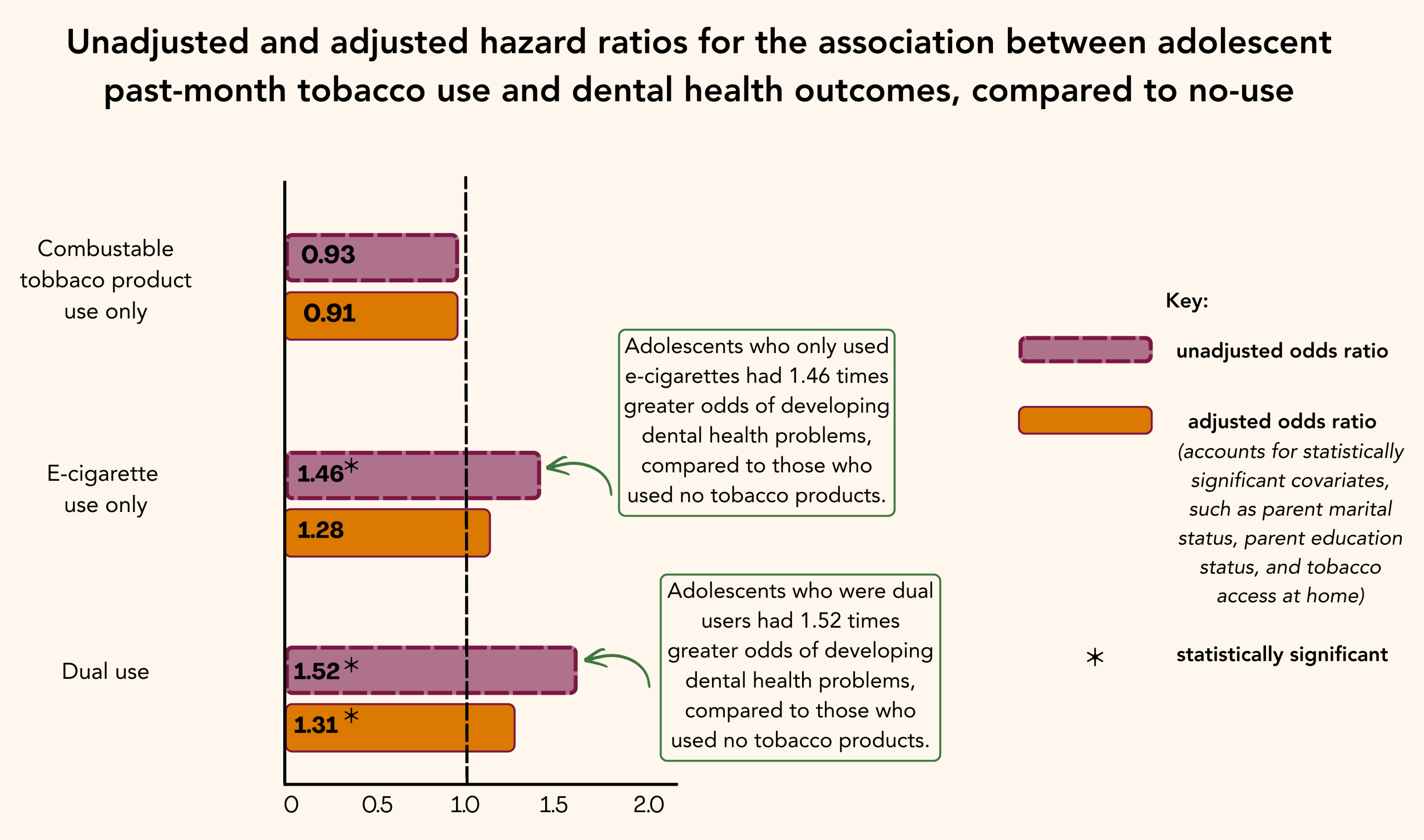
Figure. Displays the hazard odds of reporting tobacco use status and developing a dental health problem over time. Odds ratios can be interpreted as having X times greater/lesser odds of reporting an outcome compared to a reference group. Statistically significant relationships are denoted by *. Click image to enlarge.
Why do these findings matter?
Any form of smoking can negatively influence oral health. For example, chemicals in e-cigarettes can mimic the effect that high-sugar foods and acidic drinks have on dental health. According to the findings in this study, dual use among adolescents is particularly harmful, emphasizing the need for greater public awareness of its impact. This could be achieved through media campaigns, screening from healthcare providers, school outreach, and more. These efforts should not only target young people who use these products but also their guardians who are likely managing their dental care.
Every study has limitations. What are the limitations of this study?
Participants self-reported their tobacco use and dental concerns, making the results subject to recall bias. Additionally, the dental health questionnaire did not distinguish between types of dental concerns, limiting the ability to determine the impact of types of tobacco use on specific dental health conditions. Finally, this dataset used covariates that were consistent across all waves. Therefore, researchers could not determine the impact of covariates like oral hygiene and socioeconomic factors that could influence dental health and access to care in different ways over time.
For more information:
Individuals who want to quit smoking or vaping may benefit from engaging with the American Lung Association. Additional resources can be found at the BASIS Addiction Resources page.
— Nakita Sconsoni, MSW
Want CE credit for reading BASIS articles? Click here to visit our Courses Website and access our free online courses.