




Despite contributing to thousands of deaths in the U.S. each year, driving under the influence (DUI) remains prevalent. Of particular note is driving under the influence of cannabis. Cannabis is the second most common substance associated with impaired driving after alcohol. As the U.S. continues to liberalize cannabis regulations and the substance grows in popularity, it is likely that driving under the influence of cannabis will continue to increase. Therefore, this week, STASH reviews a study by Jenni Teeters and colleagues that explored the association between cannabis use and driving perceptions and behaviors.
What was the research question?
How does cannabis use frequency relate to perceptions of and engagement in driving after cannabis use (DACU)?
What did the researchers do?
The researchers analyzed data from a sample of U.S. based young adults between the ages of 18 and 29 who had engaged in DACU at least three times over the previous three months. The participants were part of a larger intervention trial, but only their baseline data were used for the current study. Participants provided information on their average weekly cannabis use over the past month and driving behaviors and perceptions over the past three months. Driving behaviors included engagement in DACU, riding with a cannabis-impaired driver (RWCD), and engaging in substance use while driving. Perceptions included dangerousness and legal consequences of DACU, peer approval and peer engagement in DACU, and amount of cannabis that is safe to consume prior to driving. The researchers then explored the relationship between cannabis use frequency, DACU, and related outcomes using a series of regression analyses.
What did they find?
On average, participants reported using cannabis on 20 days in the past month. Participants also reported DACU 25 times and RWCD 12 times on average in the past three months. Notably, cannabis use frequency predicted both outcomes with each additional day of cannabis use being associated with an 8% increase in the expected frequency of DACU and a 6% increase in the expected frequency of RWCD. Cannabis use frequency was also related to the frequency of using cannabis while driving and driving after simultaneous cannabis and alcohol use. Interestingly, though cannabis use frequency was associated with the amount of cannabis perceived to be safe before driving (see Figure), it did not predict other DACU-related perceptions like the overall safety of DACU or perceived peer norms.
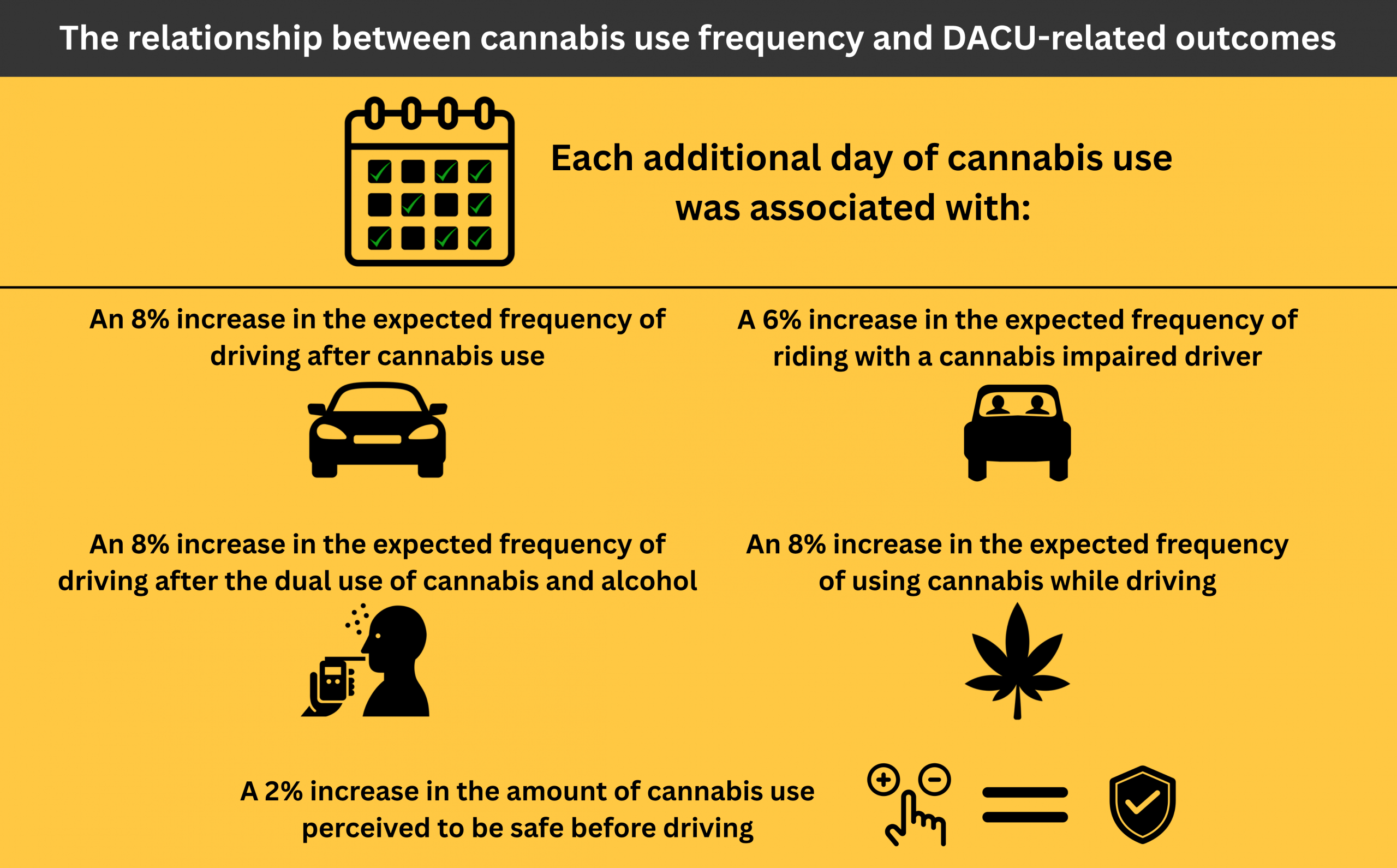
Figure. Displays the significant relationships between cannabis use frequency and driving after cannabis use-related outcomes. Cannabis use frequency is measured as days used per week over the past month. Click image to enlarge.
Why do these findings matter?
These findings provide insight into the risk factors associated with DACU. As cannabis grows in popularity, it is likely that DACU and associated harms will increase across the country. The correlation between use frequency and driving related outcomes suggests that this population needs more intensive public health messaging, similar to the Drive Sober or Get Pulled Over campaign for alcohol.
Every study has limitations. What are the limitations in this study?
This study only included participants with a history of repeated DACU who enrolled in an intervention study to reduce their cannabis use. With DUI of alcohol, repeat offenders make up an outsized proportion of total DUI arrests and show different mental health and substance use profiles than first time offenders. It is possible that these same differences based on frequency of engagement exist for DACU. Similarly, because the sample consists of those who wish to cut back on or cease their use of cannabis, it is unclear how generalizable these findings are to the larger population of individuals who use cannabis.
For more information:
Individuals who want to learn more about the effects of and potential harms from cannabis can learn more from the CDC webpage on cannabis. Others who wish to learn more about cannabis use disorder may benefit from visiting the Cleveland Clinic. Additional resources can be found at the BASIS Addiction Resources page.
—John Slabczynski
Want CE credit for reading BASIS articles? Click here to visit our Courses Website and access our free online courses.