


Compared to cisgender peers, transgender and gender diverse (TGD) emerging adults report more harmful drinking behaviors and consequences, such as binge drinking and suicidal ideation. Early adulthood can be a difficult, transitional period during which these negative thoughts and feelings might be intensified among TGD individuals. Gender minority stress might also contribute to harmful drinking behaviors. The Gender Minority Stress and Resilience model suggests that stressors, like harassment or gender dysphoria, can contribute to increased alcohol use and harm but also suggests that there are experiences that can promote resilience. This week, as part of our Special Series on Addiction Among Emerging Adults, The DRAM reviews a study by Theodore Quinn and colleagues that explored the effects of gender minority stress and resilience on alcohol use and harms among TGD emerging adults.
What were the research questions?
(1) What motivates TGD emerging adults to use alcohol? (2) What effects do they experience as a result of alcohol use? (3) How do they reduce alcohol-related harm?
What did the researchers do?
The researchers used purposive sampling to recruit 19 TGD emerging adults (aged 18-29), including 14 white and 5 participants of color, from an ecological momentary assessment study on predictors and consequences of alcohol use among TGD emerging adults. The 19 participants answered interview questions about gender minority stress, resilience, alcohol use, and barriers/facilitators to accessing services. The researchers reviewed the interview transcripts and analyzed the data using inductive and deductive approaches to better understand the relationship between stress and resilience with drinking motives and alcohol outcomes. They used thematic analysis to generate themes among responses.
What did they find?
Gender minority stress was linked to alcohol use via drinking to cope motivations among TGD emerging adults, including experiences of discrimination, isolation due to their gender identity, and gender dysphoria, particularly among participants without access to gender-affirming care (see Figure). Other motivating factors include alcohol cravings (e.g., cravings triggered by stress), peer influence (e.g., drinking to socialize), and drinking to make activities more enjoyable (e.g., drinking to enhance social interactions). Participants also reported on negative effects of drinking (e.g., health concerns) and positive effects (e.g., improved mood and gender “euphoria”). Finally, participants identified harm reduction strategies, including drinking socially versus alone and monitoring one’s alcohol use.
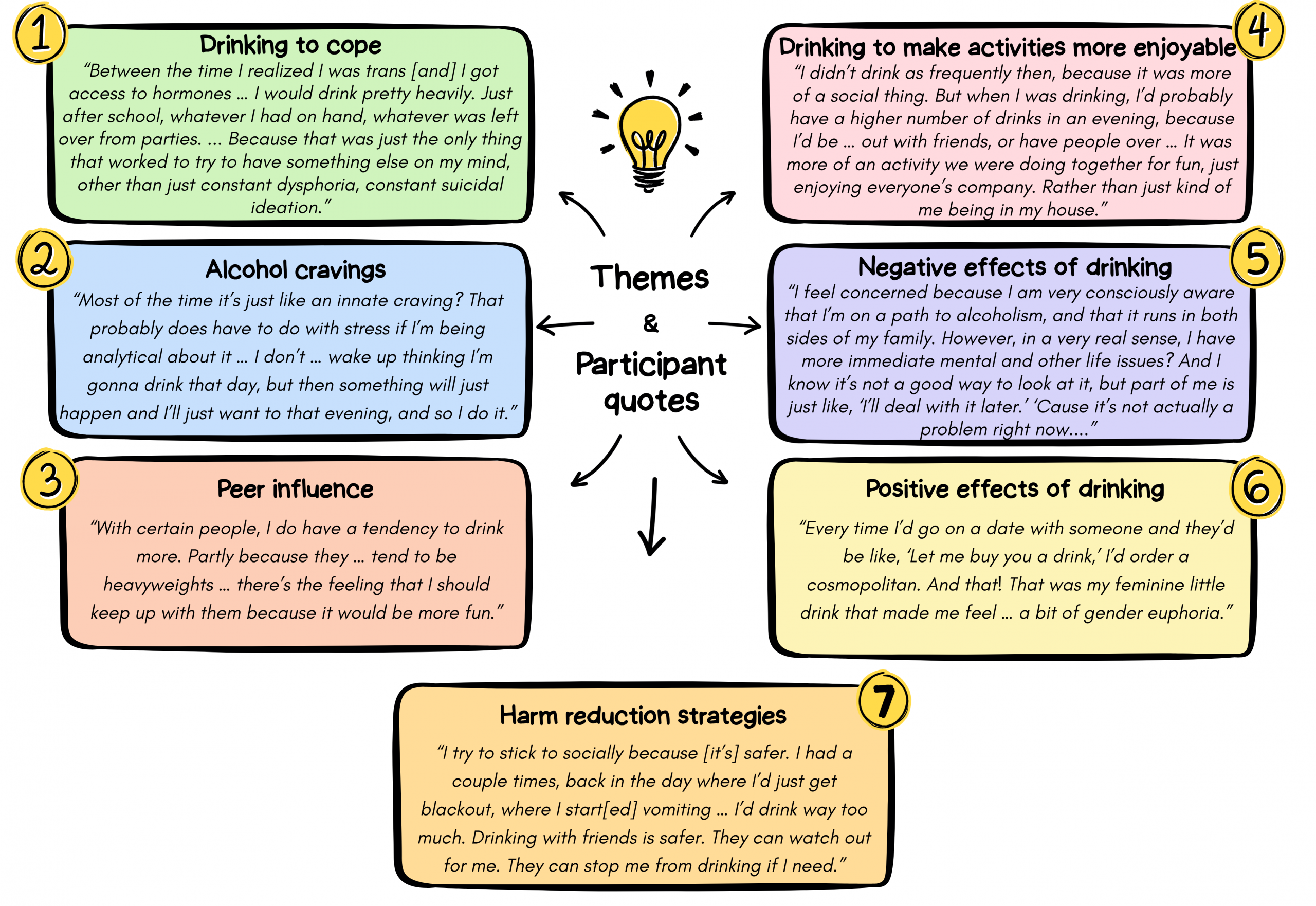
Figure. Quotes from participants categorized into themes. Click image to enlarge.
Why do these findings matter?
Emerging adulthood is a time when people experience significant life transitions – learning more about who they are and how they identify, perhaps for the first time. During this period, TGD individuals might be particularly susceptible to gender minority stress and subsequent alcohol use to cope, especially if they do not have social supports, like connections with sober 2SLGBTQ+1 spaces and access to gender-affirming healthcare. Healthcare providers can help to reinforce these protective factors by using gender inclusive language on intake forms, increasing self-awareness of countertransference by being open to learning about new identities, or developing therapy groups specific to the needs of 2SLGBTQ+ individuals who are in this transitional time period.
Every study has limitations. What are the limitations in this study?
This study focused on alcohol use, but it is possible that participants also used other substances to cope with gender minority stress. Due to the lack of diversity in the sample and the small size of the sample, the researchers were not able to determine the impact of intersecting identities (e.g., race, ethnicity, class) on responses. Finally, the results did not highlight many acts of resilience in coping with minority stress. Future research should highlight the role of this and other protective factors for alcohol use.
For more information:
Massachusetts offers a variety of supports to 2SLGBTQ+ community members. Visit the National Institute on Alcohol Abuse and Alcoholism for tips and resources for people struggling with problem drinking. For additional information and drinking self-help tools, please visit our Addiction Resources page.
— Nakita Sconsoni, MSW
Want CE credit for reading BASIS articles? Click here to visit our Courses Website and access our free online courses.
________________
1. 2SLGBTQ+ is an inclusive acronym that represents various sexual orientations, gender identities, and gender expressions. This acronym stands for Two-Spirit, Lesbian, Gay, Bisexual, Transgender, Queer, and other identities.