



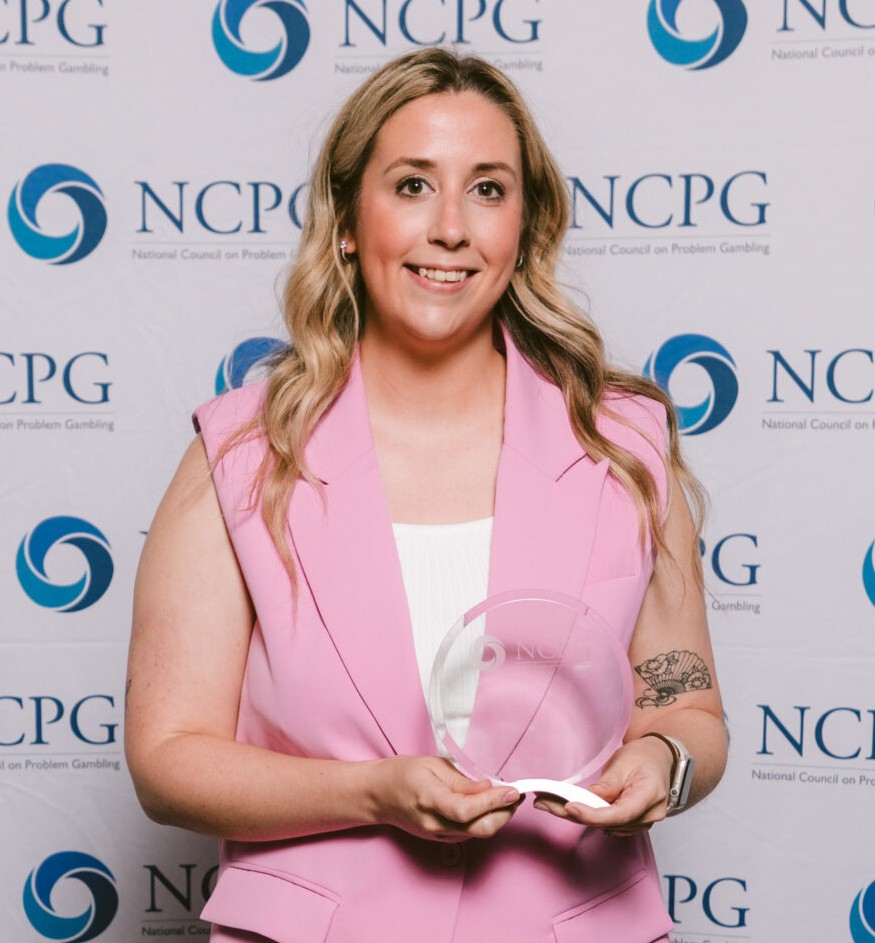
Editor’s note: Megan Poliquin, LPCC-S, LICDC-GAMB, OCPSA, is a Licensed Professional Clinical Counselor with a Supervision Endorsement, Licensed Independent Chemical Dependency Counselor with a Gambling Endorsement, and Ohio Certified Prevention Specialist Assistant. She currently serves as Manager of Gambling Treatment and Prevention programs at Zepf Center in Toledo, Ohio. In 2025, she received the Don Hulen Award for Awareness and Advocacy from the National Council on Problem Gambling, and in 2026 she was honored with an inaugural Impact Award from the Problem Gambling Network of Ohio. This op-ed is part of our Special Series on Addiction Among Emerging Adults, which was funded by a research and consulting contract with DraftKings.
 Within the first few minutes of meeting a college student, I can usually tell whether they’ve ever been asked about gambling before. “Wait, like sports betting?” they might say, pausing mid-conversation. “Does that count?”
They’re used to talking about stress, anxiety, relationships, sometimes even substance use. To today’s young adults, these are familiar questions. Expected ones. But when I ask, casually and without assumption, “What do you think about gambling?” there’s often a pause. Not defensiveness, just surprise.
“No one’s ever asked me that before.”
That moment has become a pattern in my work as a counselor and in my outreach with college students throughout Northwest Ohio. Young adults are most likely already talking about gambling at family gatherings or with friends in group chats, but almost never in structured spaces designed to support their well-being, like health and wellness or counseling centers.
During outreach events, I’ve heard students describe placing bets between classes, during games, or even when taking a break from studying. For many, it doesn’t feel like “gambling” in the traditional sense. There’s no trip to a casino, no clear start or stop. It’s just…there. On their phones. In their group chats. In the background of daily life.
And because of that, the way we talk about gambling matters more than ever before.
Young adults aren’t typically interested in lectures or warnings. They tune out messaging that feels scripted or disconnected from their reality. What they respond to, and what they consistently tell me they value, are real conversations, authentic connections, and space to talk about what’s actually happening in their lives without feeling judged.
Students will tell me stories about themselves, or their friends, who have chased losses after a bad weekend, or used betting as a way to cope with stress. Sometimes it comes out almost matter-of-fact, like it’s just part of what happened that week. Other times, they start talking and then seem to realize mid-sentence what they’re describing. Some laugh it off. Others don’t really know how to respond to their own story in the moment. But in many cases, it’s the first time they’ve had space to pause and actually reflect on what gambling really looks like.
Over the past two years, we’ve seen this pattern play out far beyond individual counseling sessions. From August 2024 to April 2026, Zepf Center’s Gambling Treatment & Prevention Program attended 34 college campus events, ranging from football games and basketball games to wellness fairs, dorm programs, and health and wellness events. In those settings alone, we collected 3,500 anonymous brief gambling screens.
What we found shouldn’t be surprising, as about 9% screened positive for likely gambling-related harm. We also asked whether they had a sports betting or gambling app on their phone, and nearly 18% said yes. And when we asked whether they knew someone who might have a gambling problem, 30% said they did.
These weren’t formal research participants or clinical referrals. These were individuals who happened to walk up to an outreach table at a campus event, have a brief conversation, and choose to complete a brief gambling screen. If this is what emerges from brief, voluntary conversations in casual campus settings, it raises a larger question: what are we missing when we don’t ask at all?
Importantly, these might not be students who would walk into a counseling center asking for help with a “gambling problem.” Many don’t identify with that label, and by the time someone does, the harm is often significant. Financial strain, academic disruption, relationship conflict, isolation, guilt, and shame could all be part of a not-so-distant reality for these individuals.
That’s why curious and compassionate conversations matter.
Yes, we should be asking about gambling more consistently in healthcare and counseling settings, but how we ask matters just as much as asking at all. A checkbox on a form won’t do what a genuine, curious, nonjudgmental conversation can.
The same is true for outreach: traditional messaging, focused on odds or warnings, might not resonate with young adults. In the college settings where I’ve provided outreach, what cuts through is honesty, relatability, and practical, real-life strategies.
Not “never gamble,” but “set a limit before you start.”
Not “this is dangerous,” but “what do you do when you lose more than you planned?”
Not “here’s the risk,” but “here’s how people get pulled in, and how to recognize it.”
When outreach reflects their reality, it becomes relevant, and when it invites conversation instead of shutting it down, it becomes effective. This isn’t about over-pathologizing behavior or suggesting that every student who places a bet is at risk; it’s about recognizing that the landscape continues to change and evolve and that our approaches have to do the same.
Emerging adults are already navigating this on their own. They’re already forming habits, beliefs, attitudes, and patterns that may follow them for years. The question is whether we, as healthcare providers, therapists, preventionists, educators, compassionate individuals, are willing to meet them where they are, not with assumptions or lectures, but with curiosity, honesty, and respect.
Sometimes, the most impactful thing we can do isn’t to warn or diagnose; it’s to start a real conversation and then actually listen.
— Megan Poliquin, LPCC-S, LICDC-GAMB, OCPSA