




Excessive alcohol consumption can lead to alcohol-related liver disease (ArLD), such as cirrhosis and hepatitis. When living with conditions like this, abstinence from alcohol is recommended but return-to-use (i.e., relapse1) is common. Return-to-use prevention strategies (e.g., medication and psychosocial support) are available for those with ArLD who want to minimize their risk of returning to harmful alcohol use. However, these strategies are often underused. This week, The DRAM reviews a study by Christopher Oldroyd and colleagues that explored how people diagnosed with advanced ArLD perceive return-to-use prevention strategies.
What was the research question?
How do patients diagnosed with advanced ArLD perceive return-to-use prevention strategies?
What did the researchers do?
The researchers recruited 33 people in the UK diagnosed with advanced ArLD (aged 30-69), representing a variety of treatment experiences – from newly diagnosed, to those who have made attempts at abstinence, and those who have achieved abstinence. The researchers conducted semistructured interviews with each participant and used thematic analysis to identify overarching themes of the interviews.
What did they find?
Three overarching themes emerged (see Figure). The first was participants’ personal motivation, confidence, and willpower in terms of their ability to abstain from alcohol. Almost all participants indicated that reducing or abstaining from alcohol was necessary for their health and well-being – however, at least some perceived that motivation, confidence, and willpower alone were sufficient in preventing return-to-use. This leads to the second theme: return-to-use prevention. Some participants found prevention strategies like environmental restructuring (e.g., limiting exposure to environments that promote problematic alcohol use) to be beneficial, while others shared more stigmatizing views – referring to those who used prevention strategies as “bad drinkers.” The final theme was alcohol histories and identities. Despite their ArLD diagnosis, some participants did not view their alcohol use as problematic and described boundaries and social norms that determined what they considered “problematic” use (e.g., drinking in the morning).
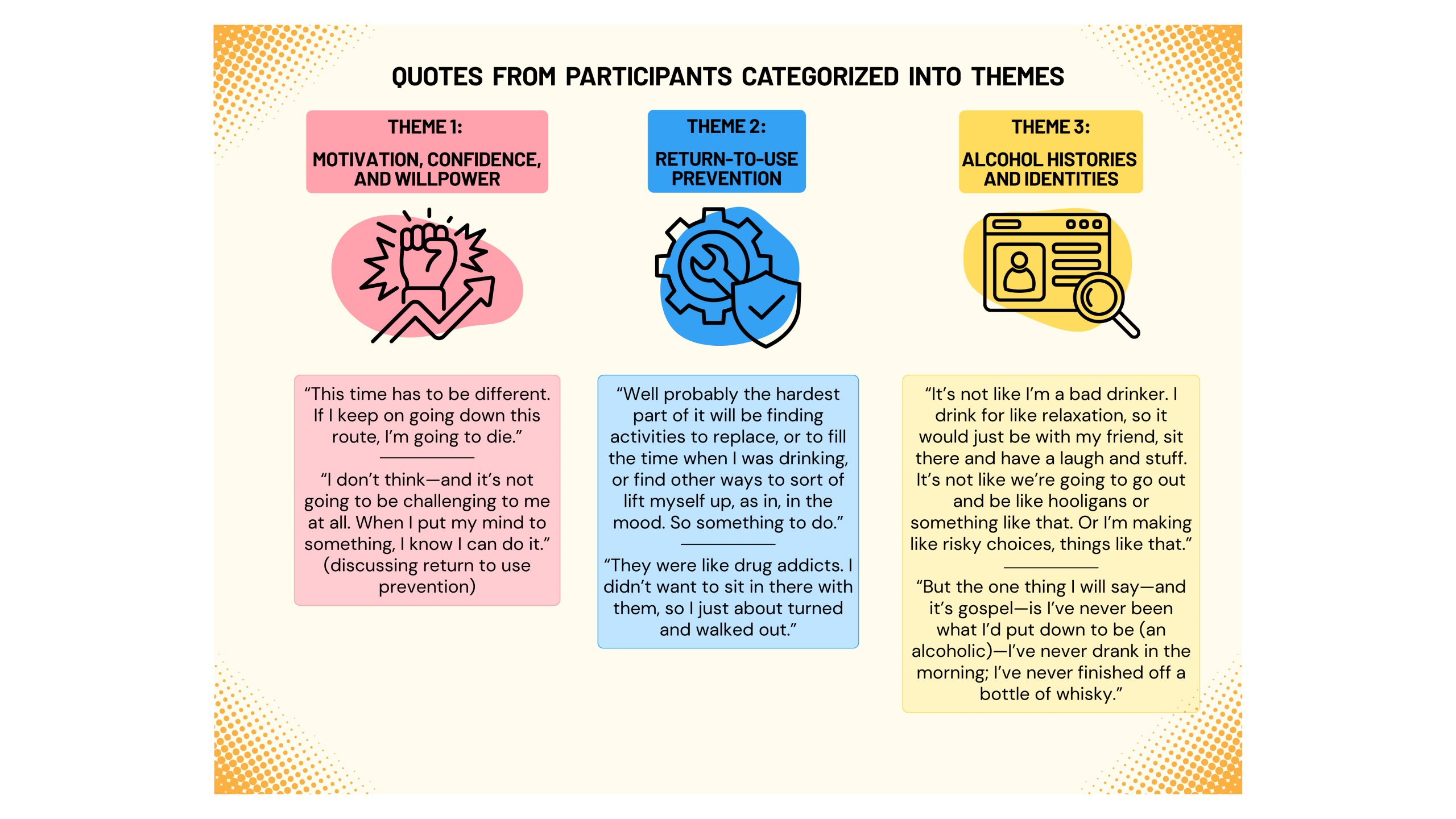
Figure. Quotes from participants categorized into three themes. Click image to enlarge.
Why do these findings matter?
At least some participants reported that motivation and confidence in oneself were the most important aspects of their recovery. Self-efficacy often plays a critical role in one’s ability to achieve and maintain recovery. However, self-efficacy alone may not be enough. Return-to-use prevention strategies, like environmental restructuring and pharmacotherapy, are also important. For example, environmental restructuring can help individuals who are diagnosed with ArLD, but don’t identify as being alcohol dependent, recognize external triggers for alcohol misuse and ways to avoid/cope with these situations. This strategy might be better suited for individuals who are not prepared to confront aspects of their identity in the same way they would if they engaged in formal treatment or support groups like Alcoholics Anonymous. Alternatively, integrating alcohol use disorder treatment (e.g., medication) into ArLD clinics might destigmatize return-to-use prevention by framing it as a normal part of managing liver disease.
Every study has limitations. What are the limitations in this study?
This study had potential for selection bias, as about half of participants approached for the study were not willing to participate due to illness or other circumstances. Additionally, the findings focused on the experiences of white participants from the UK, limiting their generalizability to the broader population.
For more information:
Visit the National Institute on Alcohol Abuse and Alcoholism for tips and resources for people struggling with problem drinking. For additional information and drinking self-help tools, please visit our Addiction Resources page.
— Nakita Sconsoni, MSW
Want CE credit for reading BASIS articles? Click here to visit our Courses Website and access our free online courses.
________________
1. In this science review, we use “return-to-use” because it is less stigmatizing than “relapse.” The term relapse can suggest that all progress is lost when someone resumes their addictive behavior. This perspective is contrary to effective addiction treatment, which recognizes varying degrees of progress.