




Innovations in the tobacco industry offset decreases in the prevalence of smoking. Of particular note are nicotine pouches (NP) – pouches containing a powder made up of nicotine, flavorings, and other ingredients that dissolve in the mouth. NPs are mostly used by people who are in the process of quitting other nicotine and tobacco products, but they can contain high levels of nicotine and are not approved by the FDA as a nicotine replacement therapy amidst public health concerns. This week, ASHES reviews a study by Olufemi Erinoso and colleagues that explored the use trends of nicotine pouches in the United States including their use as a tobacco cessation aid.
What were the research questions?
(1) What are the use patterns of NPs in the United States? (2) What factors predict the use of NPs as a quit aid or harm reduction tool?
What did the researchers do?
The researchers used data from a nationally-representative survey of tobacco/nicotine use among adults in the U.S. (N = 30,801). Participants answered questions relating to their nicotine/tobacco use (e.g., current use and methods of administration), use of NPs to quit or reduce smoking/vaping, and tobacco dependence. The authors estimated the prevalence of NP use and determined the risk factors for NP use. Next they focused on 8,841 participants who reported an awareness of NPs and used regression analyses to determine how NPs are used as cessation aids or harm reduction tools for other nicotine products.
What did they find?
Of the 30,801 participants, 3.3% reported lifetime NP use and 0.8% reported past-month use. Young adults (aged 18-24), and those whose peers used NPs, were especially likely to report past month and lifetime use of NPs, while female sex served as a protective factor. Notably, having peers who use NPs was one of the strongest predictors of using NPs to switch from or quit cigarettes and e-cigarettes, followed by engaging in cessation treatment (e.g., counseling, medications) in the past year (see Figure). Female sex, on the other hand, was the strongest predictor of having a lower likelihood of using NPs in such a way.
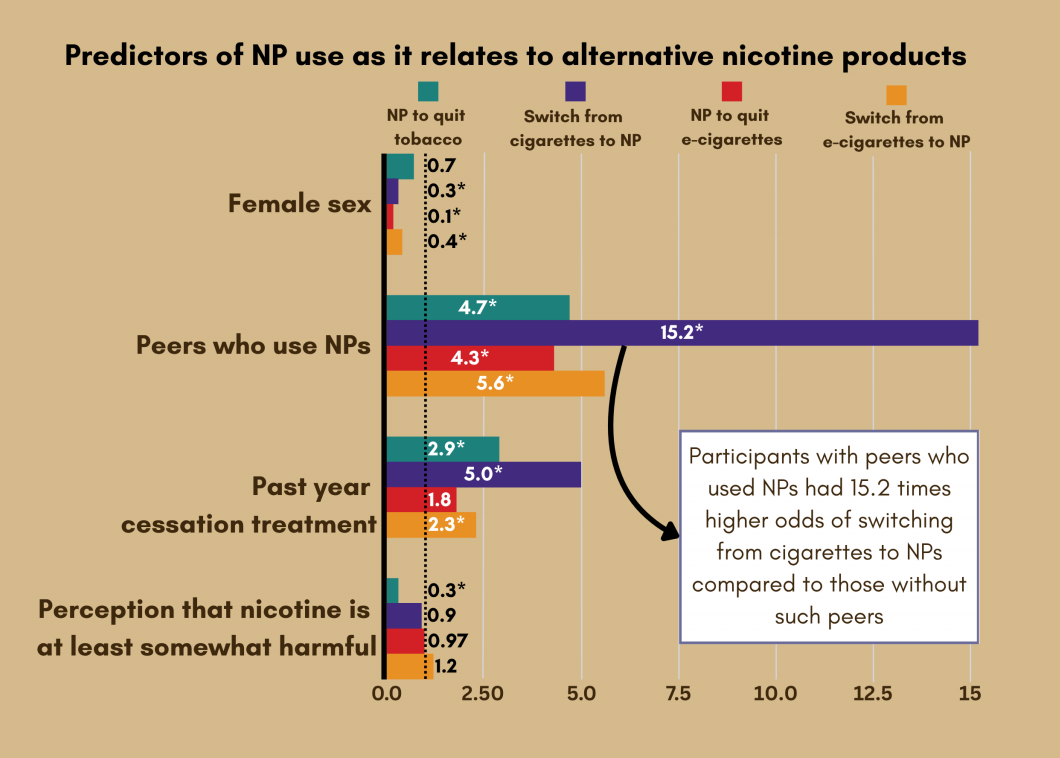
Figure. Displays the adjusted odds of reporting NP use for each of the 4 outcomes based on select factors. * indicates statistical significance. Click image to enlarge.
Why do these findings matter?
These findings suggest that NP use is currently rare but strongly influenced by peers, in line with social learning theory. This finding might be helpful for designing effective interventions, should NPs follow the same patterns as other products that emerged as smoking cessation tools, such as vapes – rapid uptake among teens and young adults who have no history of smoking.
Every study has limitations. What are the limitations in this study?
This study was cross-sectional, meaning it is unclear whether, or how, NP use relates to future nicotine use. For example, participants may report using NPs to quit tobacco but be unsuccessful in their attempt. Furthermore, analyses relating to tobacco cessation were underpowered, meaning they should be interpreted with caution.
For more information
Individuals who want to learn more about the health effects of nicotine pouches should visit the CDC webpage on nicotine pouches. Others who are concerned about their nicotine use more generally may benefit from engaging with the Mayo Clinic. Additional resources can be found at the BASIS Addiction Resources page.
— John Slabczynski
Want CE credit for reading BASIS articles? Click here to visit our Courses Website and access our free online courses.