



Harmful alcohol use, such as binge drinking, is a prominent, global contributor to disease and other health conditions, including suicide, interpersonal violence, and cancers. Individuals who identify as LGBTQ+1 are at increased risk for harmful alcohol use, compared to heterosexual or cisgender individuals. This might be explained – in part – by the Minority Stress Theory which suggests that LGBTQ+ populations use alcohol to cope with victimization and discrimination based on their sexual orientation. Another contributing factor might be point-of-sale (POS) marketing tactics at alcohol retail locations to appeal to this population, but the extent of this targeted marketing is unclear. This week, The DRAM reviews a study by Alysha C. Ennis and colleagues that assessed POS marketing strategies targeted towards LGBTQ+ individuals at Midwest alcohol retail locations.
What was the research question?
What types of POS marketing strategies are being used to target LGBTQ+ individuals?
What did the researchers do?
The researchers enlisted the help of LGBTQ+ stakeholders to identify 24 alcohol retailers in neighborhoods across Columbus, Ohio frequented by LGBTQ+ communities. They audited each location twice for LGBTQ+ marketing products/displays during the month of June (Pride month). The researchers took photos at each location and coded them for instances of LGBTQ+ targeted marketing, such as the type of products/displays, LGBTQ+ target descriptors (e.g., “love”/”pride”), and the type of imagery used (e.g., rainbows). They used frequency statistics to identify the prevalence of marketing strategies at each location.
What did they find?
Fourteen out of 24 retailers offered LGBTQ+ targeted alcohol products, consisting of 42 total LGBTQ+ targeted products, 15 unique LGBTQ+ targeted products, and 10 LGBTQ+ themed displays (see Figure). Visually, all of the products had rainbow-branded packaging and roughly half used targeted descriptors, like “pride.” Regarding promotional strategies, a common tactic was to partner with prominent LGBTQ+ organizations to bolster the brand’s trustworthiness and connect purchasing of the brand with social justice advocacy.
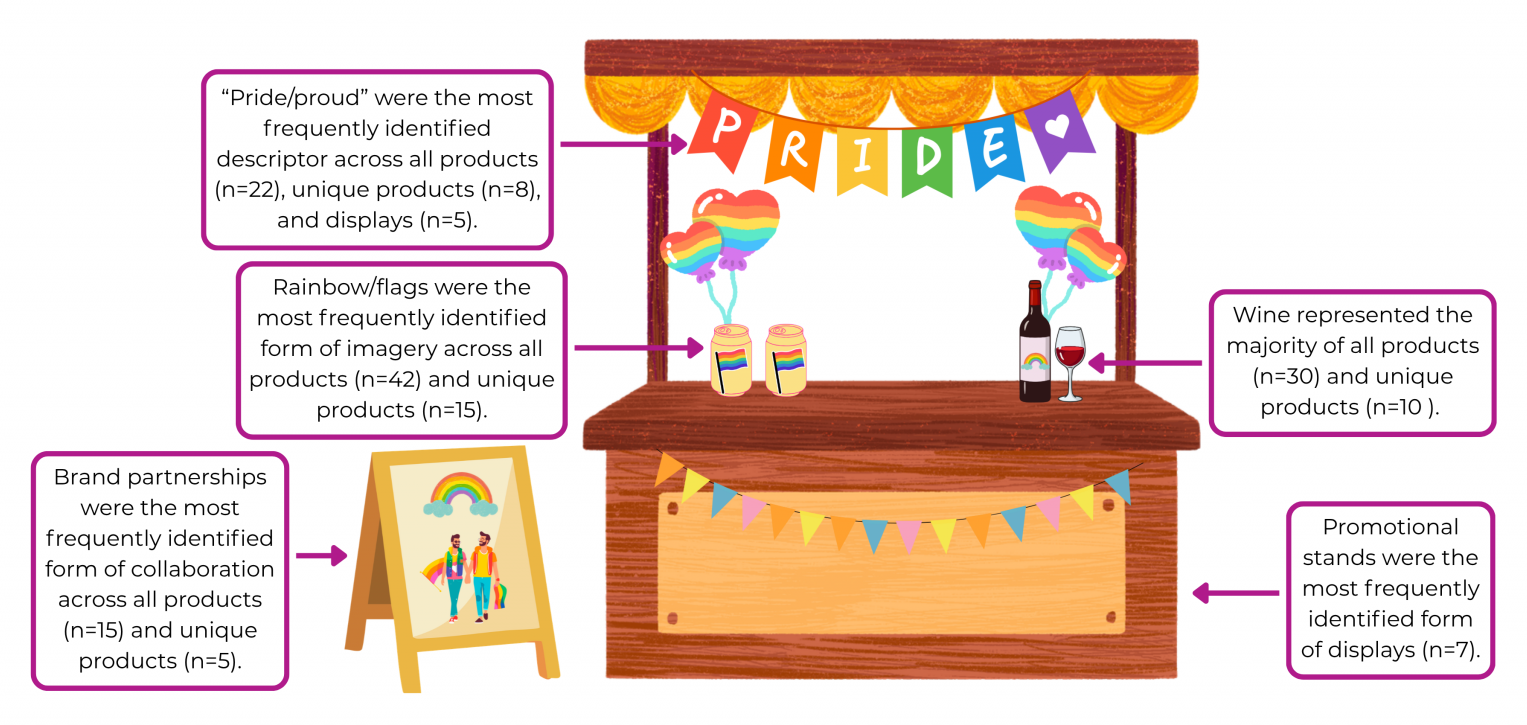
Figure. Most frequently identified marketing strategies for LGBTQ+ targeted products and displays (“n” equals the total number of occurrences). Click image to enlarge.
Why do these findings matter?
The researchers identified a variety of POS marketing strategies targeting LGBTQ+ individuals. These strategies have the potential to exacerbate the already existing alcohol-related health disparities among this population, particularly among young adults who might be more susceptible to promotions. However, there is mixed evidence about the impact of normalizing LGBTQ+ imagery in the form of brand deals between LGBTQ+ individuals/organizations and alcohol labels. Some argue that it increases LGBTQ+ visibility and legitimacy, while others argue that partnerships are performative and capitalistic and do not reflect an actual alliance with – or support for – the LGBTQ+ community. More research is needed.
Every study has limitations. What are the limitations in this study?
This study sample was determined by anecdotal evidence gathered from LGBTQ+ stakeholders, not census data of neighborhoods with the highest LGBTQ+ presence. There was also no control group to determine if these types of advertisements were specifically targeted to these neighborhoods or to the timeframe of Pride month. Lastly, the researchers who audited the retail locations also coded the marketing strategies, potentially leading to biased results.
For more information:
The SAFE Project offers resources for members of the LGBTQ+ community who are living with addiction or mental health concerns. Visit the National Institute on Alcohol Abuse and Alcoholism for tips and resources for people struggling with problem drinking. For additional information and drinking self-help tools, please visit our Addiction Resources page.
— Nakita Sconsoni, MSW
Want CE credit for reading BASIS articles? Click here to visit our Courses Website and access our free online courses.
________________
1. LGBTQ+ is a group representing people who identify as lesbian, gay, bisexual, transgender, queer, intersex, and/or asexual.