




Vaping is a public health concern among young adults, as e-cigarettes are the most commonly used tobacco product among this age group. Promisingly, existing interventions such as text messaging programs are generally acceptable and effective for vaping cessation. However, the extent to which young adults interact with these types of interventions is less clear. This topic is especially important for Latinos, who might access treatment options for tobacco use less often compared to other racial groups. This week, ASHES reviews a study by Rafael Orfin and colleagues that examined engagement with a text messaging intervention for vaping cessation among Latino young adults.
What was the research question?
(1) To what extent do Latino young adults interact with a text messaging intervention for vaping cessation? and (2) What are common topics discussed in those text messages?
What did the researchers do?
Forty Latino young adults aged 18–25 participated in a pilot study of a vaping cessation text messaging intervention. The intervention consisted of 212 messages about quitting and maintaining cessation sent over a 3-month period. The researchers measured participants’ levels of interactivity, which ranged from no interactivity (0 text messages sent back) to very high interactivity (at least 100 text messages sent back). They also used thematic analysis to identify common themes in the content of the text messages.
What did they find?
Participants sent an average of 17.3 text messages during the 3-month period. Most participants had low (55%) and medium (30%) interactivity with the program, while only 5% had no interactivity and 2.5% had very high interactivity (see Figure).
In regards to the content of the messages, one common theme was quitting for family. For example, one participant wrote that “[I am quitting vaping for] myself mostly, but also my parents and siblings. Allow them to know that I’m helping myself by being a little more healthy.” Another theme was the intervention’s helpful strategies to quit. One participant wrote that “Your advice to throw my vapes out was my saving grace last night.” Other themes included benefits of quitting, self-efficacy, barriers to quitting, support from family/friends, and support from the intervention itself.
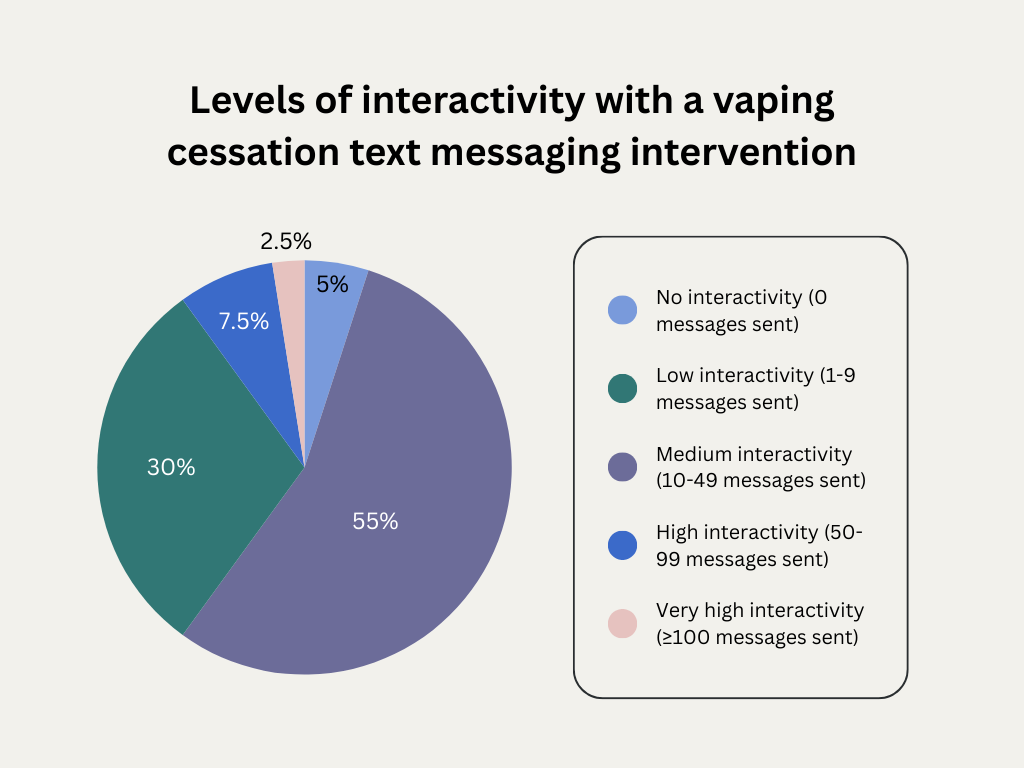
Figure. Participants’ levels of interactivity with the vaping cessation text messaging intervention, based on the number of text messages that they sent back. Click image to enlarge.
Why do these findings matter?
Participants had varying levels of text messaging interactivity, which offers insights into user experiences with the intervention. Common topics identified in the text messages are also useful for improving the intervention’s content. For example, many participants mentioned family as a reason for quitting, which suggests that the program could include advice about the supportive role of family during the vaping cessation process, especially since Latino users are particularly likely to seek familial support for quitting. It is important that these interventions are not only informational and practical, but also culturally sensitive and adapted for specific populations.
Every study has limitations. What are the limitations in this study?
The researchers did not examine any characteristics of the text messages from the program itself that generated an interaction in the first place. Additionally, this study did not assess how levels of interactivity with the intervention impacted vaping cessation rates, so future research could examine this relationship.
For more information:
SmokeFree offers tools and tips for quitting and maintaining abstinence from smoking tobacco. The Centers for Disease Control and Prevention also provides research and tips about cigarettes and how to quit. For additional self-help tools, please visit the BASIS Addiction Resources page.
— Annette Siu
Want CE credit for reading BASIS articles? Click here to visit our Courses Website and access our free online courses.