




Multiple tobacco product (MTP) use is common among youth in the US. Harms from MTP use are amplified compared to single tobacco product use and can include higher nicotine dependance, fewer attempts to quit, and greater odds of problematic substance use. Research on how and why youth use these products can inform MTP prevention campaigns, an under-represented form of prevention messaging. This week, ASHES reviews a study by Sierra L. Patterson and colleagues that explored why youth use MTPs, their perception of MTP risks, and obstacles/facilitators to smoking cessation.
What were the research questions?
(1) Why do youth use MTPs? (2) How do they perceive MTP smoking risks and cessation?
What did the researchers do?
Thirty participants (aged 14-20) who smoked MTPs in the past 30 days were recruited via social media and print ads across North Carolina. They participated in seven, virtual focus groups to inform tobacco prevention messaging for youth. Participants were separated by age into groups (14-17 and 18-20) and reported on reasons for using MTP, perceived risks, and cessation. The researchers transcribed the focus groups, coded responses, and used thematic analysis to identify overarching themes.
What did they find?
Three overarching themes emerged (see Figure). The first theme identified access, convenience, and social factors as primary reasons for MTP use. Unlike participants in previous research, focus group members indicated that they did not use e-cigarettes to quit traditional cigarettes. The second theme was related to uncertainty and misperceptions of e-cigarette ingredients and harms. Participants perceived cigarettes to be less harmful than e-cigarettes, with some thinking cigarettes were more “natural” and contained fewer chemicals. Lastly, the third theme identified more obstacles than facilitators to smoking cessation. Participants wanted to quit smoking but lack of support, access to MTP, and withdrawal symptoms made it difficult to do so, but identified that peer support could promote cessation.
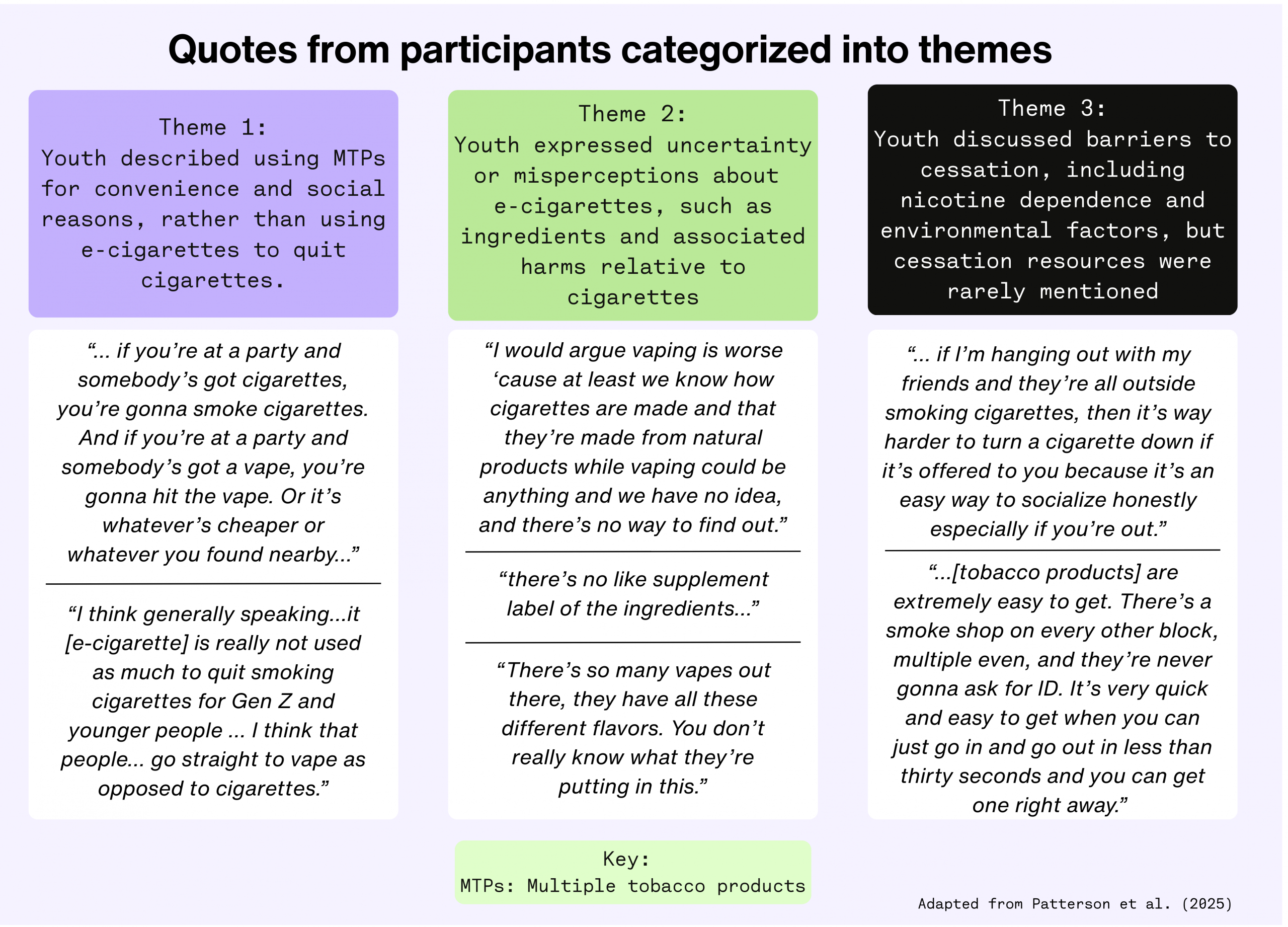
Figure. Quotes from participants categorized into three themes. Click image to enlarge.
Why do these findings matter?
These findings suggest that limiting access to e-cigarettes, and providing clear prevention messaging and cessation resources, could help reduce MTP use among youth. Because the pathway to MTP use among many participants began with e-cigarettes, public health officials could advocate for stricter policies on e-cigarette access, like enforcing age verification to purchase products. Additionally, prevention messaging, including education on smoking risks and ingredient lists, should be tailored to MTP use, not just e-cigarettes. Resources should also provide unique suggestions for cessation based on the type of product.
Every study has limitations. What are the limitations in this study?
Focus groups only gathered information about past 30 day e-cigarette, cigarette, and cigar use. Other tobacco products were not included. The researchers could not report on differences among age groups because only one focus group was conducted with 14-17 year-olds.
For more information:
SmokeFree offers tools and tips for quitting and maintaining abstinence from smoking tobacco. The Centers for Disease Control and Prevention also provides research and tips about cigarettes and how to quit. For additional self-help tools, please visit the BASIS Addiction Resources page.
— Nakita Sconsoni, MSW
Want CE credit for reading BASIS articles? Click here to visit our Courses Website and access our free online courses.