




FoMO, or the “fear of missing out,” is the feeling that others are having fun, experiencing exciting events, or enjoying activities that one is absent from. This can lead to feelings of anxiety, sadness, or a sense of exclusion and isolation. Research has shown that FoMO can influence drinking behavior, including intentions to drink and amount consumed. Helping people cope with FoMO might support their attempts to stop drinking or drink less. This week, The DRAM reviews a study by Kendell Dew and colleagues that analyzed Reddit discussions to explore how people manage FoMO when reducing their alcohol use.
What was the research question?
What strategies do Redditors (users of Reddit) who are trying to reduce their drinking use to manage feelings of alcohol-related FoMO?
What did the researchers do?
Reddit is an online social media platform where people can join communities, called “subreddits,” to share experiences, ask questions, and discuss topics with others. The researchers searched subreddits focused on problematic drinking for posts related to FoMO and alcohol use. They identified 135 relevant threads with a total of 2,476 comments, all written after 2019 and in English. The researchers extracted the comments and conducted a content analysis to identify and categorize suggestions for managing alcohol-related FoMO.
What did they find?
The most common suggestion for managing FoMO was focusing on the benefits of not drinking. Commenters described reframing not drinking from “missing out on something good” to “missing out on something bad,” such as hangovers or added expenses. This also included taking time to appreciate the benefits of not drinking, like improved relationships and health. Finding alternative activities to replace time otherwise spent drinking was another common suggestion. This included both solo and social activities, such as watching movies or spending time outdoors. Additional suggestions included reframing social circles to include sober friends and beyond drinking contexts, attending events sober or avoiding alcohol-focused settings, choosing non-alcoholic drinks instead of alcoholic ones, and seeking outside support through peer groups, therapy, or medication (see Figure).
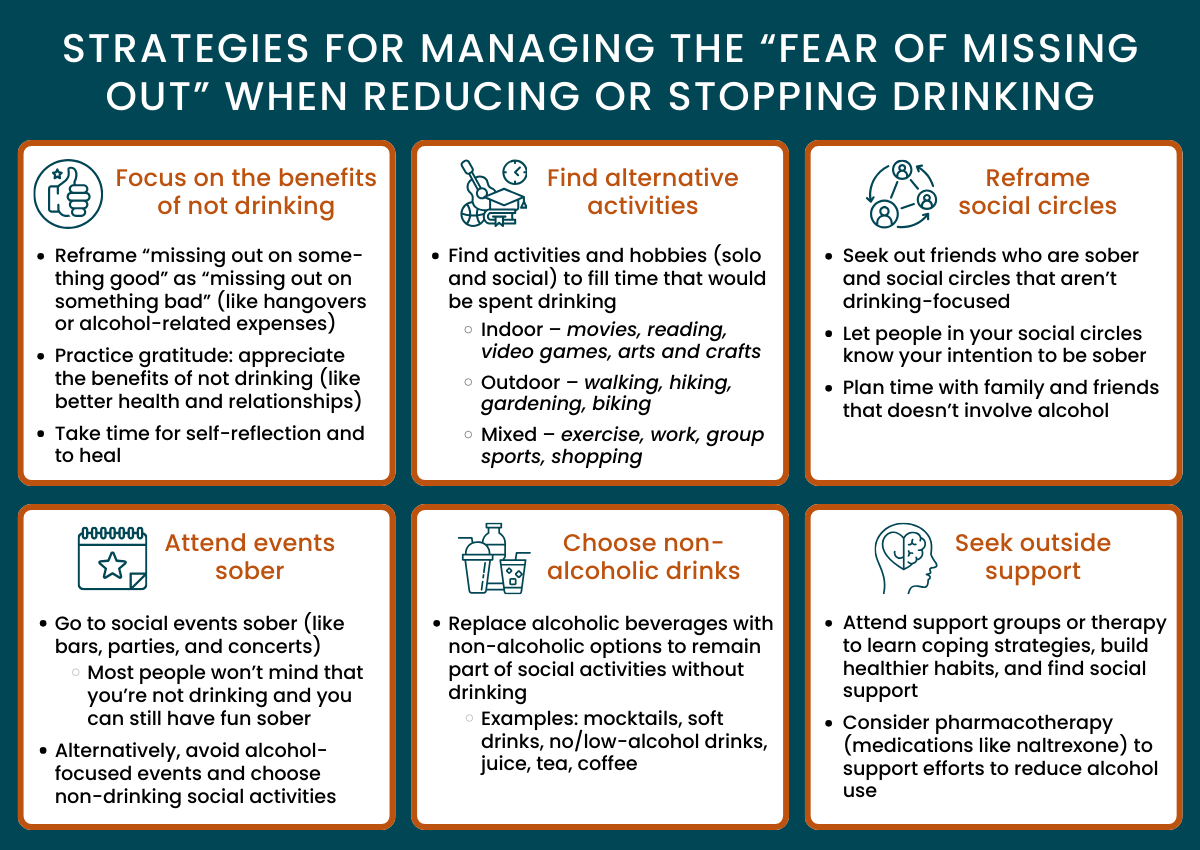
Figure. Strategies for managing the “fear of missing out” when reducing or stopping drinking, from an analysis of Reddit discussion threads. Click image to enlarge.
Why do these findings matter?
Because FoMO is linked to drinking behavior, it might be important for people reducing or stopping alcohol to have strategies for managing these feelings, particularly in social situations where others continue to drink. This study highlights real-world approaches people use to cope with alcohol-related FoMO. Healthcare professionals and public health advocates can reinforce these strategies through clinical guidance and targeted messaging to help individuals manage FoMO and stay committed to reducing or stopping drinking. Future research is needed to determine whether addressing alcohol-related FoMO actually leads to improvements in drinking reduction and sustained sobriety, and whether the specific strategies outlined in this review are effective.
Every study has limitations. What are the limitations in this study?
Although Reddit is a global platform, the site is more commonly used by men, individuals ages 18–34, and people in the United States. Because the demographic characteristics of the “Redditors” included in this study were unknown, the findings may reflect the perspectives of these groups more than others and may not generalize. Additionally, Reddit’s search function may not have captured all relevant subreddits or threads, which could introduce bias into the results.
For more information:
The National Institute on Alcohol Abuse and Alcoholism has tips and resources for people who want to cut back or stop drinking. For additional information and drinking self-help tools, please visit our Addiction Resources page.
— Kira Landauer, MPH
Want CE credit for reading BASIS articles? Click here to visit our Courses Website and access our free online courses.