


Discrimination against Hispanic populations is pervasive in the United States. Online outlets, such as social media, provide platforms where this intolerance can thrive. Living in a chronically online world can make it increasingly difficult for individuals to manage the negative impacts of discrimination, leading to unhealthy coping responses like alcohol use. However, psychological resilience might be the key in combating this adversity. This week, The DRAM reviews a study by Miguel Ángel Cano and colleagues that examined the impact of online discrimination on alcohol misuse among Hispanic college students and determined if psychological resilience moderated these effects.
What were the research questions?
(1) Does online discrimination experienced by Hispanic college students influence their drinking behaviors? (2) Is this relationship moderated by psychological resilience?
What did the researchers do?
The researchers analyzed cross-sectional data collected from a convenience sample of 423 Hispanic college students for the Project on Hispanic Emerging Adults and Resilience to Thrive. They were from two universities, one in Florida and one in Texas, and their ages ranged from 18 to 25. The participants completed online questionnaires that measured sociodemographic information, past-year alcohol use, coping drinking motives, and psychological resilience. Additionally, they self-reported online discrimination by indicating, on a scale from “never” to “very often”, how frequently they/other users receive racist social media posts about Hispanic individuals. Using a mediation analysis, the researchers examined the direct and indirect associations of online discrimination on alcohol use via coping drinking motives. Following this, they conducted a conditional process analysis to determine if psychological resilience moderated these associations.
What did they find?
Online discrimination was not directly associated with alcohol use severity. However, it was indirectly associated with alcohol use severity via coping drinking motives, suggesting that online discrimination can create an unhealthy cycle of stress that might prompt individuals to use alcohol to regulate and manage their emotions. Importantly, the researchers found that this pathway was no longer statistically significant among participants with higher levels of psychological resilience, potentially because these individuals learned healthier ways to adapt and recover from experiences of minority stress and discrimination (see Figure).
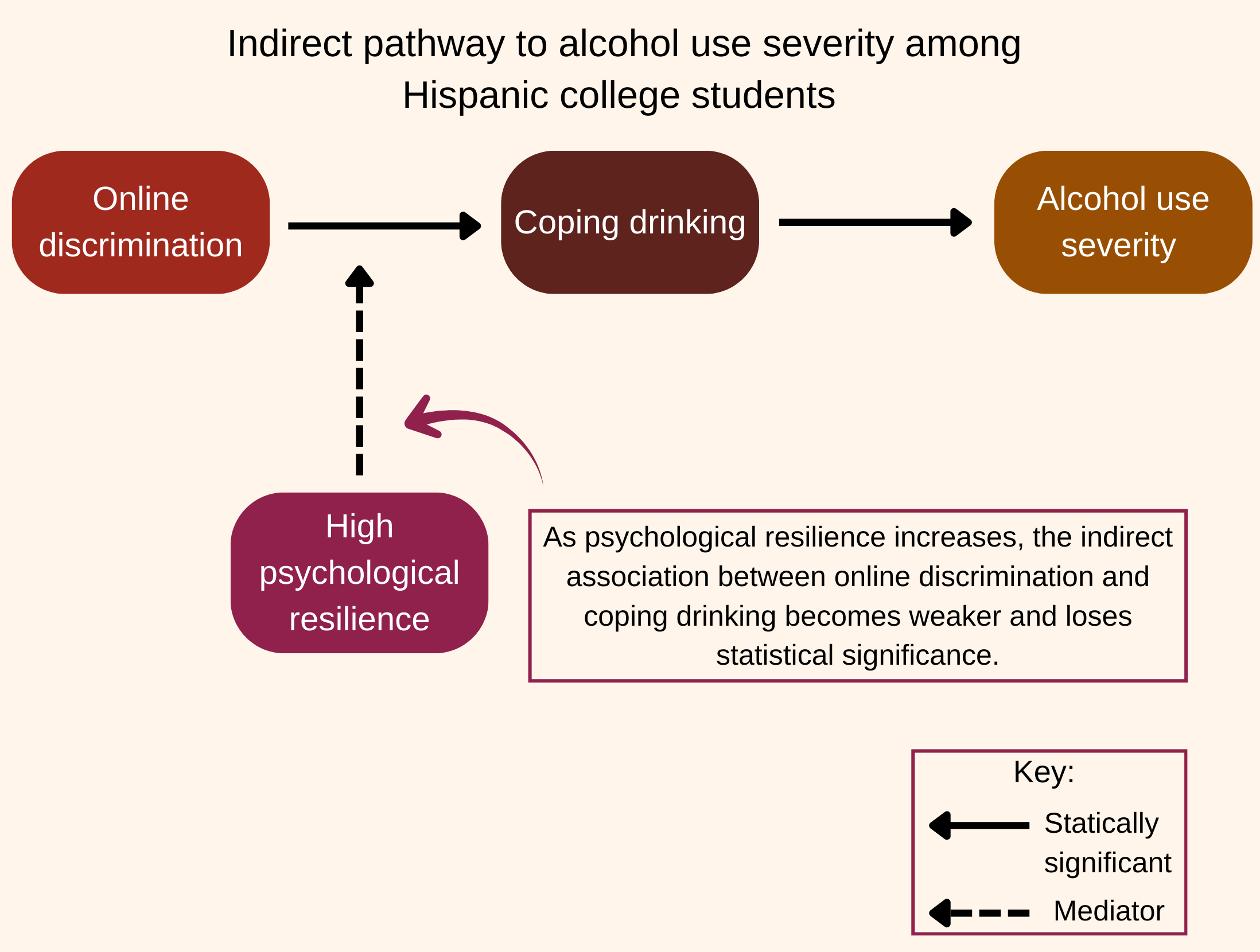
Figure. Depicts a significant indirect pathway to alcohol severity among Hispanic college students. High levels of psychological resilience mediate this pathway. As psychological resilience increases, the indirect association between online discrimination and coping drinking loses significance. Click image to enlarge.
Why do these findings matter?
These results suggest that Hispanic, college-aged individuals who use social media might be particularly vulnerable to alcohol misuse. If not properly addressed, alcohol misuse can progress into alcohol use disorder, especially in college environments where excessive drinking is common and acceptable. However, there is hope that resilience can mitigate these harms. Professionals, like educators and clinicians who work closely with this population, should advocate and work to combat discrimination both online and in person, and also work to strengthen and build resilience among this population. This could include prioritizing healthy relationships, finding a sense of purpose in life, or reframing negative thoughts.
Every study has limitations. What are the limitations in this study?
The researchers only measured psychological resilience, leaving out other important aspects of resilience such as interpersonal and community resources. Because the sample was made up of college students, rates of resilience might be higher than non-college students, potentially due to the challenges/adversities that students overcome as they navigate a new college experience. Additionally, the researchers did not assess the types of discriminatory messaging, so it is possible that different cultures and people have different perceptions of what is considered discriminatory, suggesting that the emotional impact of messages might vary from person to person.
For more information:
The National Institute on Alcohol Abuse and Alcoholism has tips and resources for people struggling with problem drinking. For additional drinking self-help tools, please visit our Addiction Resources page.
– Nakita Sconsoni, MSW
Want CE credit for reading BASIS articles? Click here to visit our Courses Website and access our free online courses.