




Gambling has become a popular leisure activity. While some people can gamble without any problems, others experience meaningful harm. Determining who experiences harm might be, in-part, related to whether or not they previously endured Adverse Childhood Experiences (ACEs). ACEs are traumatic events that occur before the age of 18 and can have lasting impacts into adulthood. Impacts can include mental health or substance use problems, but more research is needed to determine whether ACEs could also lead to gambling-related problems. This week, The WAGER reviews a study by Maria Moxey and colleagues that explored the association between ACEs and gambling to determine how this knowledge can inform treatment.
What were the research questions?
(1) How do gambling treatment seekers experience ACEs and (2) how can these experiences inform treatment?
What did the researchers do?
The researchers recruited 195 gambling clients from two UK gambling treatment providers. They measured participants’ ACEs and problem gambling scores, and compared those scores to the general UK population. Ten participants also engaged in a follow-up interview to explore the personal impact of their ACEs, including how they responded and coped with their experiences. The researchers reported frequencies and percentages for the quantitative measures and used thematic analysis to identify interview themes.
What did they find?
Among the sample, 40.5% reported 4+ ACEs, compared to 8.3% of the general population. The most commonly reported ACEs were parental separation or divorce (54.9%), verbal abuse (46.2%), emotional abuse (39.5%), and living with someone who misused substances (38.4%). In addition to this, four themes emerged from the interviews on ACE impacts (see Figure). The first theme (Childhood Trauma and Exposure to Abuse) emphasizes participants’ experiences growing up in households where they witnessed or experienced violence and acknowledges that this exposure shaped their emotional development. The second theme (Intergenerational Transmission of Addictive Behaviours) recognizes that intergenerational addiction can occur through normalizing addictive behavior within a household and learning from or mimicking that behavior, especially from an early age. It also recognizes how experiencing trauma, such as neglect or abuse, can lead to addictive behavior. The third theme (Gambling as Perceived Emotional Regulation) reflects participants’ use of gambling as a coping mechanism to escape painful emotions or as a way to build self-esteem. The fourth theme (Experiences of Treatment) emphasizes the need for more clinicians who are trained to deliver trauma-informed care and the need to establish treatment plans that address how ACEs might contribute to gambling behavior.
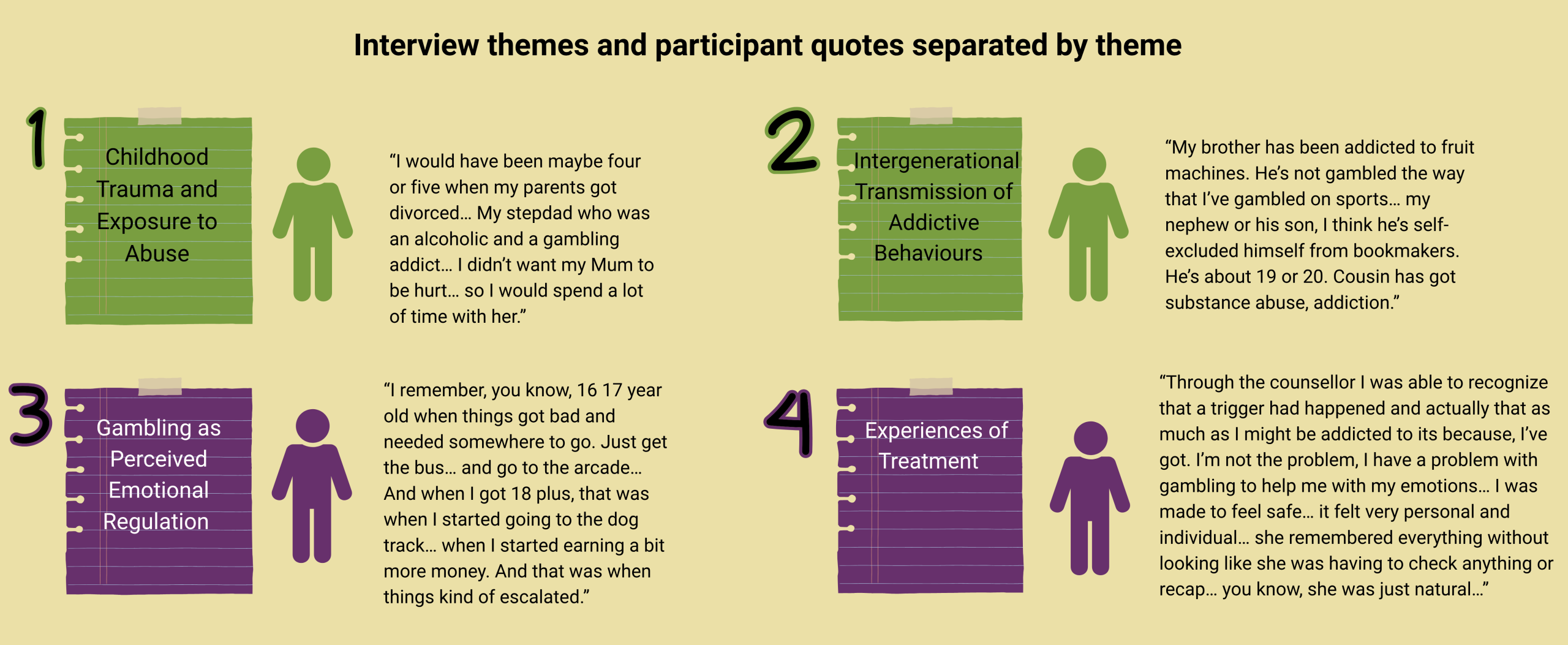
Figure. Themes related to participant interviews, and select quotes from participants separated by theme. Click image to enlarge.
Why do these findings matter?
This study highlights a connection between gambling problems and ACEs. The interviews and researcher analysis shed light on the pathway from early childhood trauma to problematic gambling behavior. For example, childhood ACEs can alter brain development in ways that increase emotional vulnerability and impair impulse control, leading someone to gamble as a way to escape or regulate emotions. The connection between ACEs and gambling problems reinforces the need for comprehensive family histories at treatment intake and trauma-informed treatment, wherein the client can work through their emotional responses in a safe environment without needing to relive past traumas.
Every study has limitations. What are the limitations in this study?
The findings cannot be generalized to all gamblers because the sample only included gamblers already in treatment, and the interview sample was quite small. Future research is needed to determine the causal relationship between ACEs and gambling problems and whether people are motivated to engage in specific types of gambling based on their trauma histories.
For more information:
Individuals who are concerned about their own or someone else’s gambling may benefit from visiting the National Council on Problem Gambling. For additional resources, including gambling and self-help tools, visit our Addiction Resources page.
— Nakita Sconsoni, MSW
Want CE credit for reading BASIS articles? Click here to visit our Courses Website and access our free online courses.