




Protective behavioral strategies (PBS) are approaches for minimizing harm when consuming potentially harmful substances. One example is alternating between alcoholic beverages and water. These strategies can help people avoid substance-related harms. It is unclear, however, what influences PBS use. For instance, engaging in treatment for heavy drinking might encourage people to use PBS more often. Furthermore, it is not known how these strategies influence drinking-related outcomes. This week, The DRAM reviews a study by Kevin Montes and colleagues that explored PBS use among a sample of heavy drinkers, including some who had sought help for their drinking.
What were the research questions?
(1) Does receiving help for heavy drinking relate to PBS use? (2) How does the use of PBS relate to drinking-related outcomes, such as frequency of drinking?
What did the researchers do?
The researchers recruited 367 adults who drink heavily using social media and flyers in alcohol treatment centers/consumption facilities. Eligible participants answered questions about their daily drinking habits, alcohol consequences (e.g., While drinking, I have said or done embarrassing things), and their use of three kinds of behavioral protective strategies they use: Manner of Drinking (e.g., not mixing different kinds of alcohol), Serious Harm Reduction (e.g., using a designated driver), and Stopping/Limiting Drinking (e.g., putting extra ice in one’s drink). The researchers separated participants into help-seekers and non-help-seekers based on whether participants indicated receiving help, such as from formal treatment or mutual support groups, for their alcohol use. Using a combination of ANOVAs and count-based regression models, the research team identified how PBS use impacts drinking behavior and whether receiving help impacts PBS use.
What did they find?
On average, help-seeking participants reported using more total and more Manner of Drinking PBS. They did not report using more Serious Harm Reduction or Stopping/Limiting Drinking strategies. In terms of drinking-related outcomes, those who received help reported more alcohol-related consequences (e.g., “I have taken foolish risks when I have been drinking”) but did not differ on drinking quantity or frequency. People who used Manner of Drinking strategies more frequently reported a lower average drink quantity, though none of the PBS types related to drinking frequency (see Figure). Interestingly, those who reported using Stopping/Limiting Drinking strategies more frequently also reported more consequences from their drinking.
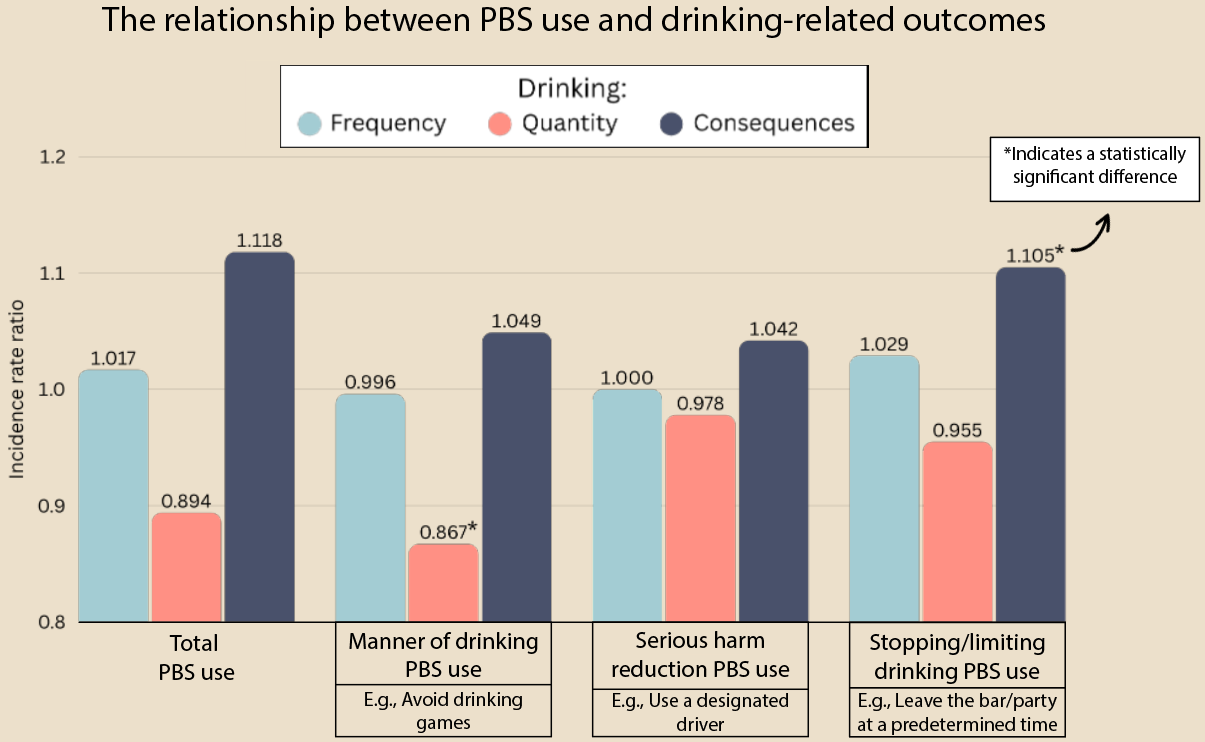
Figure. Displays the relationship between PBS use and drinking-related outcomes in terms of incidence rate ratios (IRR). IRRs less than 1 indicate that more frequent use of PBS is associated with lower incidence of drinking-related outcomes. IRRs greater than 1 indicate that more frequent use of PBS is associated with higher incidence of drinking-related outcomes. IRRs close to or equal to 1 indicate that levels of PBS have no association with incidence of drinking-related outcomes.
Why do these findings matter?
These findings clarify how alcohol-related support relates to PBS use. The fact that those who have received help for their drinking used PBS more frequently suggests that support from others encourages more responsible drinking habits, particularly in terms of the manner of drinking. To the extent that this relationship reflects a causal relationship between help-seeking and PBS use, this finding underscores the value of seeking help. Furthermore, because help-seeking did not relate to the use of Serious Harm Reducing or Stopping/Limiting Drinking strategies, drinking interventions could encourage more use of these underutilized strategies.
Every study has limitations. What are the limitations in this study?
This study excluded individuals who received help but were in sustained recovery from their alcohol use problem. Because of this, these results may not be generalizable to everyone who received help for their drinking. Additionally, all survey questions were asked at a single time point, so it is unclear (for example) why those who received help reported more consequences from their drinking. Although it is possible that those who sought help already experienced more alcohol-related consequences, the cross-sectional nature of this study precludes such claims.
For more information:
Individuals who are concerned about their drinking may benefit from visiting the National Institute on Alcohol Abuse and Alcoholism’s resource page. Others who want to learn about practices that can help reduce their alcohol intake should visit the National Heath Service’s page on cutting down your use. Additional resources can be found at the BASIS Addiction Resources page.
— John Slabczynski
Want CE credit for reading BASIS articles? Click here to visit our Courses Website and access our free online courses.