ASHES, Vol. 22(8) – Profiles of nicotine initiation by product type
Nicotine pouches (NPs) are a relatively new nicotine delivery method that some have championed as a harm reduction tool. However, they present serious health risks, especially for adolescents. New programs that are designed to help teens avoid NP use could be targeted to those who are especially at risk, for maximum impact. Therefore, this week, ASHES reviews a study by Olufemi Erinoso and colleagues that explored the profiles of youth who start using different nicotine products, including NPs.
What was the research question?
How do youth who start using NPs differ from those who only start vaping or cigarette smoking?
What did the researchers do?
The researchers analyzed two waves of data from a nationally-representative survey of U.S.-based youth (ages 12-22). The survey collected data on participants’ perception of and use of NPs, vapes, and cigarettes in addition to sociodemographic information and other environmental exposures to nicotine products, once between January 2022 to April 2023 (baseline) and once between April 2023 to December 2023 (follow-up; about one year later for each participant). Using multivariable logistic regression, the researchers explored how the profiles of youth who started using NPs compared to those who only started smoking cigarettes or vaping.
What did they find?
An estimated 2.4% of the sample started using NPs in between the baseline and follow-up surveys, 6.2% started vaping, and 3.2% started smoking cigarettes. Overall, the factors measured at baseline that predicted NP initiation were similar to those that predicted smoking initiation, including older age, higher incomes, and having vaped nicotine. Black participants were less likely to start using NPs and smoking cigarettes. There were some unique predictors of vape initiation: being female, being 15-17 (compared to 12-14 or 18-22) at baseline, being Hispanic, having important peers who vape nicotine, and being exposed to tobacco advertising. Those who reported vaping at baseline were also more likely to start using NPs and smoking cigarettes (see Figure).
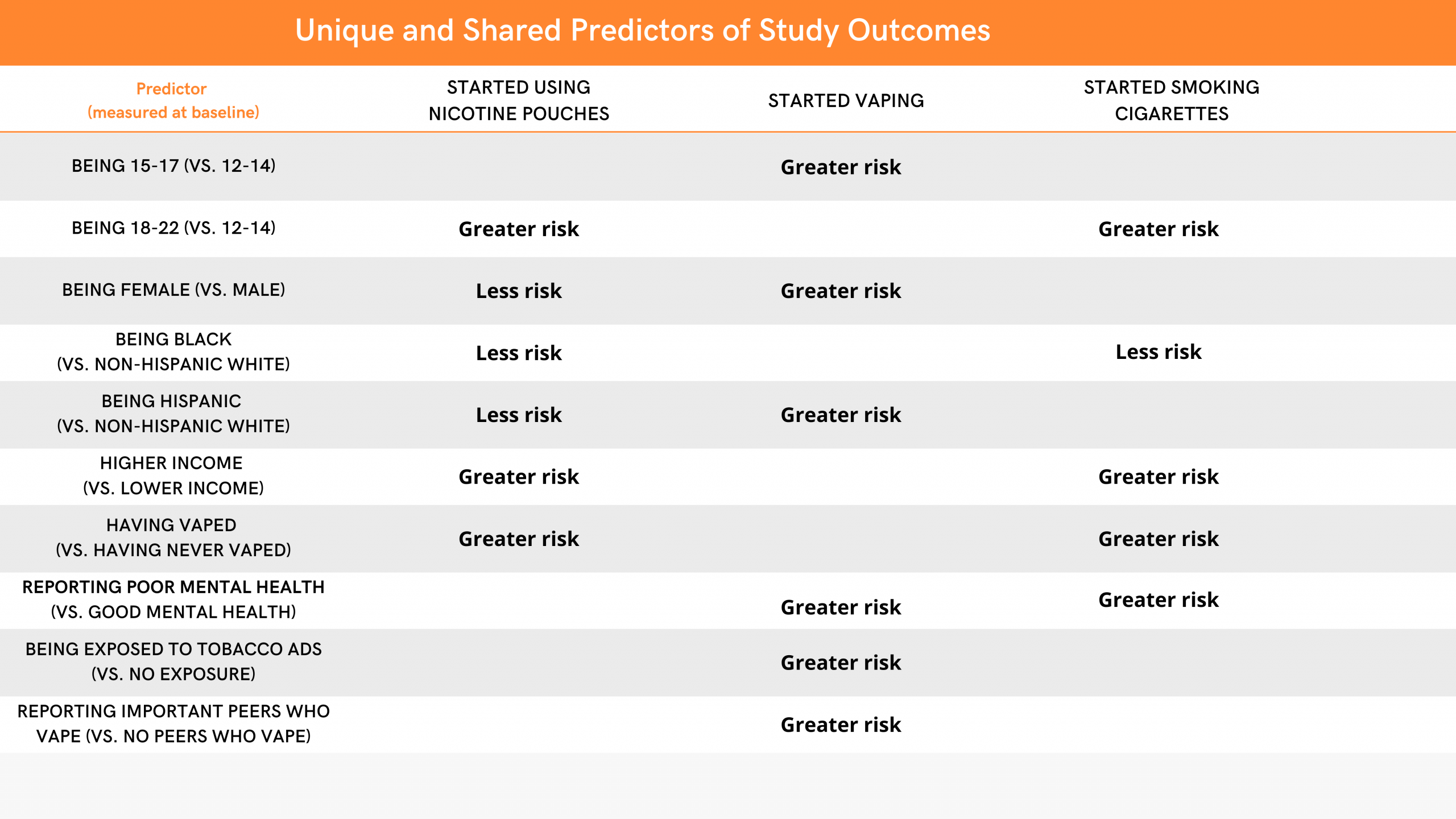
Figure. Study nicotine product outcomes based on baseline predictors. Click image to enlarge.
Why do these findings matter?
These findings provide nuance into our understanding of the risk factors for nicotine initiation. Because many of the risk factors for NP initiation were also risk factors for cigarette initiation, it might be possible to modify existing nicotine prevention programs, such as the Truth Initiative, to reduce the likelihood that teens will start using NPs.
Every study has limitations. What are the limitations in this study?
The researchers did not include a measure of frequency of use, so it is unclear whether these factors are associated with experimenting with nicotine or the development of nicotine addiction. It is possible that some of the youth who initiated use, used the product once or twice which carries less health risks compared to frequent or consistent use.
For more information:
Individuals who are worried about their nicotine use may benefit from visiting smokefree.gov. Others who want to learn more about nicotine among youth may wish to engage with The Truth Initiative. Additional resources can be found at the BASIS Addiction Resources page.
— John Slabczynski
Want CE credit for reading BASIS articles? Click here to visit our Courses Website and access our free online courses.