



Too often, substance use disorders (SUDs) go undetected and untreated. Dentists often establish long-term relationships with their patients, and some people who visit their dentist don’t seek other kinds of healthcare. As a result, dentists might be in a good position to screen their patients for SUDs and offer counseling when needed, ensuring that fewer cases go undetected. This week, STASH reviews a study by Jenna McCauley and colleagues that explored dentists’ views on, and tendency to engage in, these practices.
What were the research questions?
(1) How often do dentists screen and counsel their patients for SUDs? (2) What factors influence dentists’ tendency to perform these behaviors?
What did the researchers do?
The researchers surveyed 790 practicing dentists who were active members of the National Dental Practice-Based Research Network. The survey asked how frequently dentists screened and offered counseling for SUDs, among other topics. It also assessed potential barriers to SUD screening.
What did the researchers find?
Most respondents indicated that they do screen for substance use. They were especially likely to report screening for nicotine use. But, when asked how often they screen, they typically reported doing it either annually or only during the first visit, rather than more than once a year (see Figure). When asked how often they counsel adult patients who identify issues with their substance use, respondents typically reported that they do this less than 25% of the time.
Respondents reported screening less often if they believed (1) patients would not be truthful or that it might make patients or staff uncomfortable, (2) it was not the responsibility of their practice, not relevant to oral health, or not an appropriate/effective setting, or (3) they lacked the necessary resources, including knowledge about how to manage SUDs.
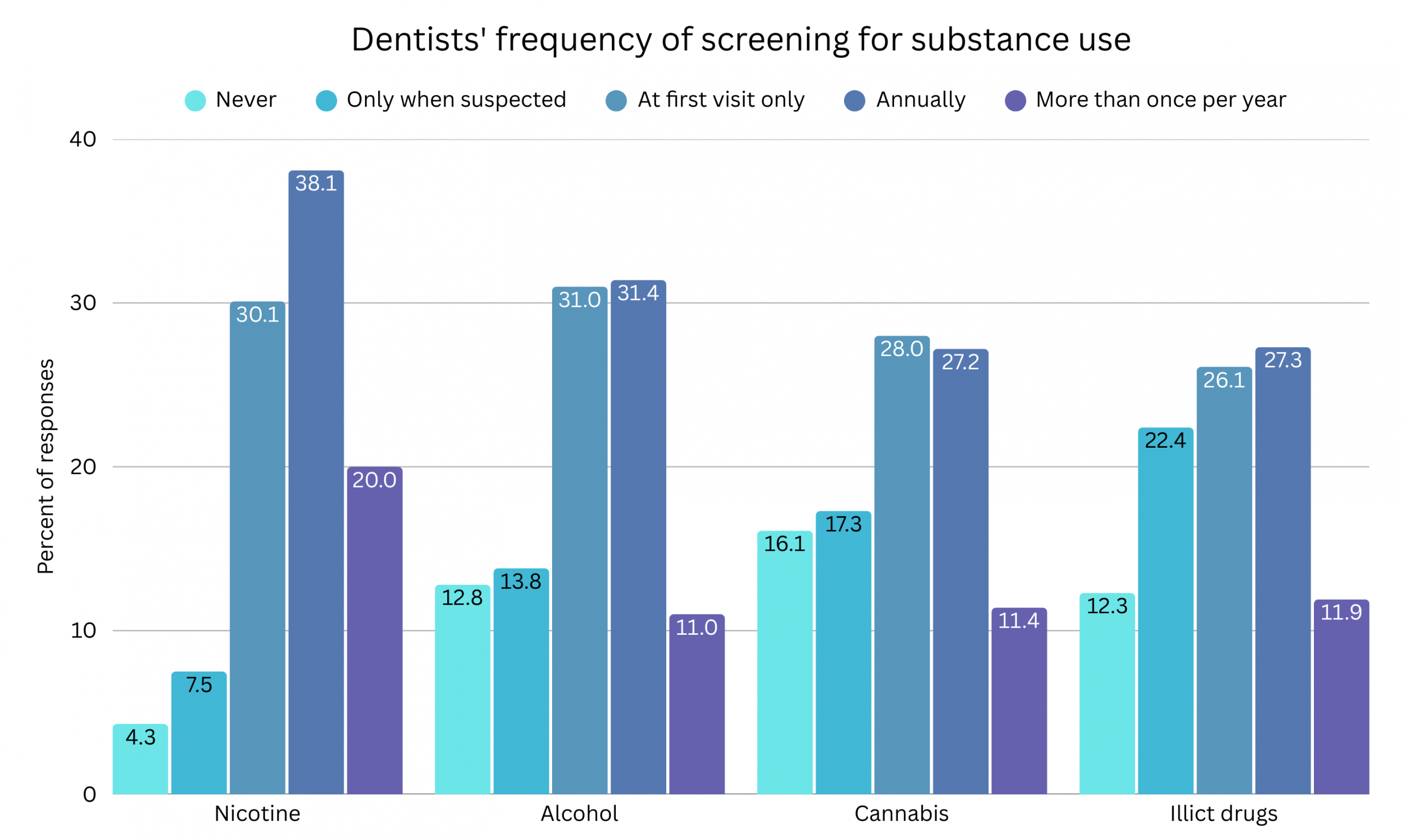
Figure. Frequency of screening for nicotine, alcohol, cannabis, and illicit drug use among dentists, as reported in McCauley et al. (2026).
Why do these findings matter?
SUDs can threaten people’s oral health. This makes the dentist’s office an appropriate place to screen for SUDs, as long as dentists and their staff have the resources to respond effectively when someone screens positive. This study suggests that dentists could benefit from more training and information, such as information about validated screening instruments, like the National Institute on Drug Abuse’s substance use screening tool for use in frontline health care settings. Tangible resources and reimbursement for the time it takes to engage in these behaviors would also help.
Every study has limitations. What are the limitations in this study?
Dentists self-selected into the study, and those who were especially interested in identifying SUDs might have been especially likely to complete it. This could have biased the results.
For more information:
If you are worried that you or someone you know is experiencing addiction, the SAMHSA National Helpline is a free treatment and information service available 24/7. For additional general resources and tools, please visit the BASIS Addiction Resources page.
— Heather Gray, PhD
Want CE credit for reading BASIS articles? Click here to visit our Courses Website and access our free online courses.