




Methamphetamine has become the second most commonly used illicit drug worldwide, behind cannabis. People suffering from methamphetamine use disorder have few effective treatment options, as there are no approved medications, psychosocial interventions show modest effects, and contingency management, which has demonstrated efficacy for this condition, is not routinely available. This week, STASH revies a study by Jonathan Brett and colleagues that explored how patients with methamphetamine use disorder experience a treatment package consisting of psychotherapy and psilocybin, a psychedelic.
What was the research question?
How do patients with methamphetamine use disorder experience psilocybin-assisted treatment (PAT)?
What did the researchers do?
The researchers recruited 12 patients with methamphetamine use disorder who were interested in engaging in PAT. The patients engaged in three preparatory psychotherapy sessions, a psilocybin dosing session, and two psilocybin-assisted psychotherapy sessions. The psychotherapy sessions incorporated the principles of acceptance and commitment therapy and motivational interviewing. The researchers used patients’ narrations during these sessions, along with interviews conducted before and after the study, to identify themes that traced participants’ experiences throughout the study. We review some of these themes below.
What did the researchers find?
- Participants began the study with positive but realistic hopes about PAT. They were hoping that their relationships, work, and broader lives would improve but also felt a need to manage their expectations, and some felt anxiety about the experience. None had used PAT before.
- Many patients reported new and global understandings about their lives and life situations as a result of their PAT.
- Many participants described “leaning into the obstacle” during their psilocybin-assisted sessions. They became aware of an obstacle in their lives, such as a lingering childhood trauma, which often created vivid imagery and painful feelings. They described an intentional resolve to overcome their painful feelings in order to give space to the obstacle, and this stance was associated with feeling more power over their methamphetamine use.
- Participants reported wide-ranging impacts beyond methamphetamine use, including improvements in their jobs, relationships, sexual practices, exercise, self-image, and mood.
See the Figure for example statements about these themes.
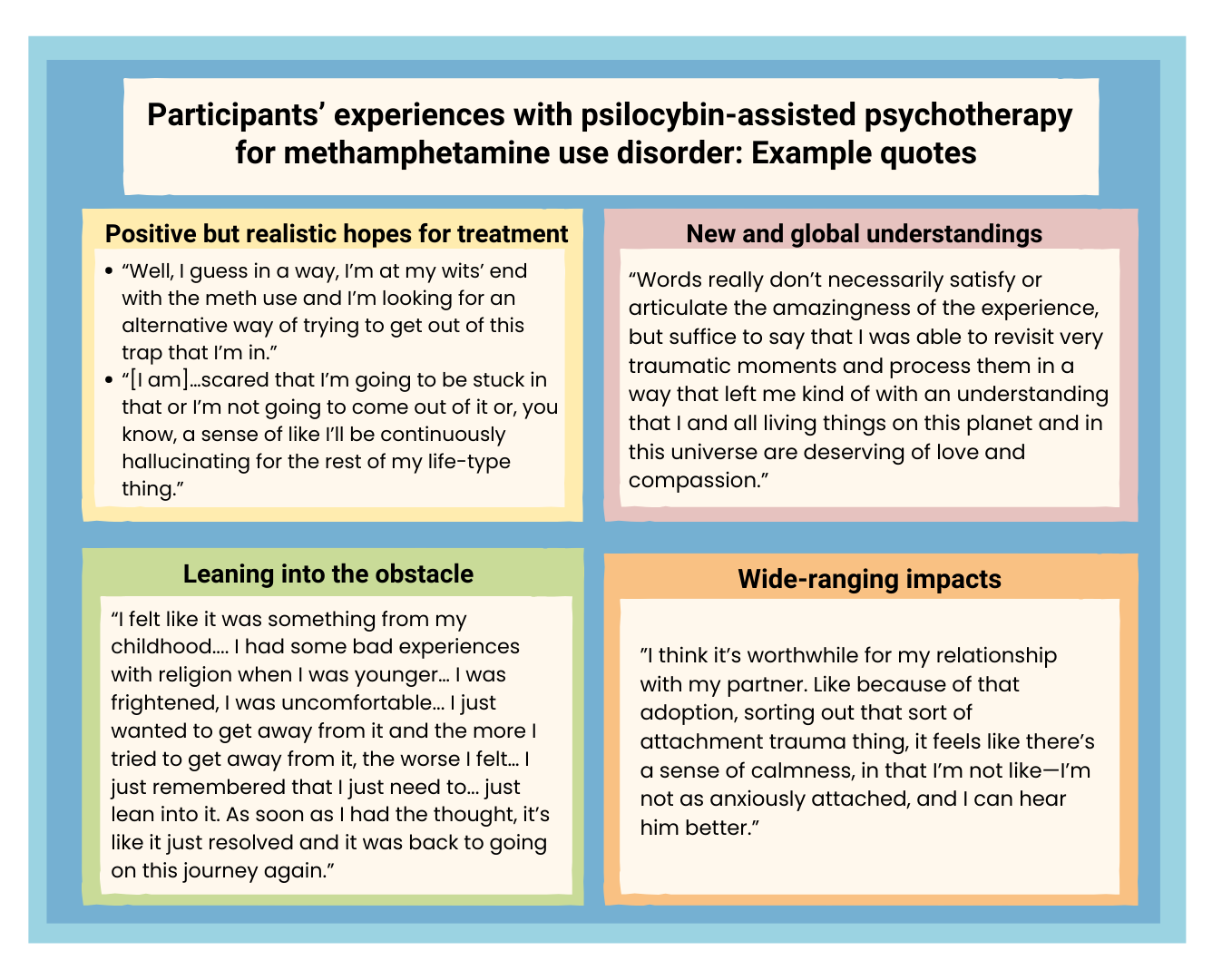
Figure. Example quotes illustrating themes in participants’ experiences with psilocybin-assisted treatment for methamphetamine use disorder. Adapted from Brett et al. (2025). Click image to enlarge.
Why do these findings matter?
Discovering that PAT was generally acceptable, and often transformative, among this sample of participants with methamphetamine use disorder is important because more effective treatments are badly needed. Other studies have suggested that PAT is feasible and safe for this condition. Now, larger studies need to be conducted, including studies that vary the dosage of psilocybin and psychotherapy.
Every study has limitations. What are the limitations in this study?
This was a small study and was not designed to objectively measure changes in methamphetamine use as a result of treatment. Also, patients self-selected into the study, so they might have been predisposed to have positive reactions to the treatment.
For more information:
The National Center on Substance Abuse and Child Welfare provides a fact sheet on methamphetamine use disorder and resources for help. For additional general resources and tools, please visit the BASIS Addiction Resources page.
— Heather Gray, PhD
Want CE credit for reading BASIS articles? Click here to visit our Courses Website and access our free online courses.