The Family and Community are the Client
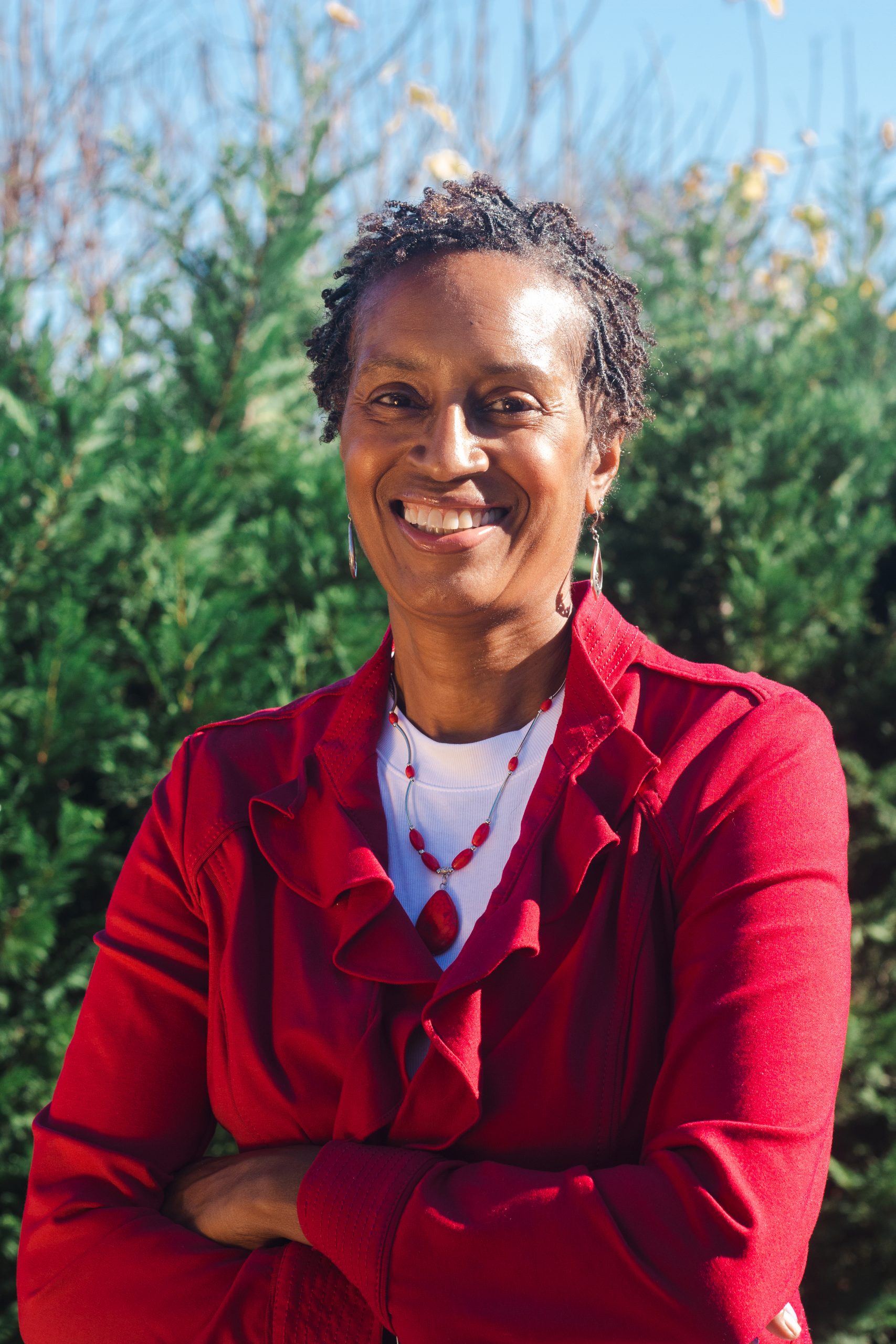
Editor’s note: This op-ed was written by Dr. Deborah Haskins, Ph.D., LCPC, ACS, ICGC II, BACC, ICGSO, CGT. Dr. Haskins is a retired Counselor Educator (25 years) and received her Ph.D. in Pastoral Counseling from Loyola College, Maryland. Dr. Haskins is a Licensed Clinical Professional Counselor, an Internationally Certified Gambling Counselor- II, Board Approved Clinical Consultant, and IGCCB Certified Gambling Trainer. She is President Emerita of the Maryland Council on Problem Gambling and is a recognized leader for over 30 years in disordered gambling and over 35 years in cultural humility, health equity, and community wellness. She received the 2021 National Council on Problem Gambling Monsignor Joseph Dunne Lifetime Achievement Award for Advocacy. This op-ed is part of our Special Series on Addiction and Affected Others.
 Gambling harm is a family and community issue
Ms. S. met a handsome Black young fella, and during their dating she never knew he had an alcohol and gambling problem. Many Black men gambled with crap games in the community and “ran numbers games” (akin to lottery) to take care of their family. Soon, four children came at the same pace as his gambling problems grew. Ms. S. left the marriage, because “It was just too much! I couldn’t take care of our children because when he got paid, he would gamble all the money away.” Even when they dissolved the marriage, no one knew the marital problems were due to the gambling problems.
Black families did not participate in therapy, because they couldn’t trust Western healthcare after the Tuskegee medical harm and Henrietta Lacks exploitation. Culturally, people and families just handled emotional and life distress themselves, and one did not let anyone know if there also was financial struggle.
“Life was hard enough for Black families…they didn’t want one more strike against them! Decades later, there are resources but back then there was nothing!” – Gambling Counselor, Scholar-Practitioner, and Public Health Leader
“Dr. Haskins, I’m calling for help, because my boyfriend is addicted to gambling. He gambled away our rent and bill money, and his constant lying has eroded my trust in him and this relationship. He needs professional help! I’m committed to emotionally supporting him, but I can’t stay in this relationship…I just can’t do it anymore! He says he is now ready to get professional help.” – Intimate Partner
“My father used to be a ‘numbers runner’ as a Black man. This was his grind. He told me he used to pay off the police ‘to look the other way’…Do you know on his death bed, as he is dying in the ICU, he asked me: ‘What is the number today?’ I couldn’t believe it!” – Adult Daughter
“Our Dad was addicted to gambling…He played golf and taught me and my brother to play golf. No surprise that my brother and I also got addicted because we learned everything from our dad. Golfing was how we connected…If we weren’t golfing with Dad, we didn’t see him. Our dad died by suicide, and my brother and I became estranged from each other. After two years of not speaking, my brother called me recently, we forgave each other, and we decided to spend time golfing again. Eventually, I stopped attending my college classes this year (senior year), but I was so happy to reconnect with my brother…I miss him!” – College Student1
“We are increasingly seeing mothers especially, and other family members calling for help. Their teenager, young adult, or family member is hooked on sports betting and online gambling…Families report that they had no idea the child was addicted to gambling, and the financial losses are bigger in a matter of weeks, versus months or years, now due to the fast pace of the technology formatted games.” – Gambling Crisis Helpline Volunteer2
What do these five scenarios highlight? These scenarios highlight the impact of problem, disordered, and risky gambling behaviors, not just on the person with the risky gambling behaviors, but also on the family, friends, and others around the person gambling.
The first scenario is my family of origin. I am an affected other. Gambling harm not only creates emotional, financial, physical, and spiritual impacts on the person engaged in the risky behaviors, but their risky behaviors affect others: spouses, partners, children, family members, friends, coworkers, and the community. Research documents that for every person with a gambling problem, many family members and significant others are impacted. Due to the acceleration and expansion of gambling across the United States and around the globe, along with AI and other technology advances, consumers of gambling are engaging in sports and prediction market betting at faster rates. These faster methods also negatively impact others who also develop accelerated rates of distress, chaos, confusion, financial harm, and hopelessness.
Currently, public health and problem gambling advocates are collaborating with legislators to get federal funding to support expanded gambling disorders treatment for individuals, families, and communities. The bipartisan POINTS Act targets gambling addiction funding, and public health policy leaders and legal scholars have started a movement called the Family and Friends of Gamblers (FFOG)3. I am happy to support launching this movement as an affected other and a gambling public health leader, so that we can “lift the fog and silence” of gambling addiction on families and other affected others, provide them a voice and resources, and bring about needed change to eliminate the gambling product danger on consumers.
Over the last four or more decades, public health efforts centered around the person with problematic behaviors. In fact, the Reno Responsible Gambling (RG) Model and early prevention efforts focused on people with problem gambling behaviors changing their behaviors, such as limiting gambling time and material resources used. Recent scholarship highlights the limitations of the RG Model and argues that more research is needed, moving beyond the focus on individuals who gamble.
Many communities, including cultural communities, lack equity, which drives motivation to gamble and continue in the gambling despite the negative harm. In 2021, Victor Ortiz and his colleagues argued that families lack equity, and that prevention efforts must include a comprehensive problem gambling prevention model where equity and social justice is at the core. Today, the Massachusetts Department of Public Health Office of Problem Gambling Services aims to “Hear Our Voices” particularly among priority communities who, historically to present day, experience high risks of gambling harm despite protective factors existing for some individuals/families. Ortiz and colleagues also show evidence of community engagement and the importance of using people with lived experiences of gambling and other addictions to connect individuals, affected others, and community members to gambling care resources.
The client is the family
Dr. Joseph W. Ciarrocchi, one of the leading gambling disorders scholar-practitioners, who led the first gambling treatment program in the State of Maryland, and one of my doctoral professors and mentors, stated, “The client is the family.” Dr. Ciarrocchi (now deceased) articulated this statement in his book, Counseling Problem Gamblers: A Self-Regulation Manual for Individual and Family Therapy. Even in 2000, Dr. Ciarrocchi’s chapter titled, “Introduction to Clinical Interventions: A Plea for Family Involvement” described the painful experiences of persons “caught up” in the disease of gambling addiction/problem gambling; individuals and their families, he wrote, also experience trauma from the negative effects of gambling harm. Dr. Ciarrocchi described a shift in their worldviews, where before gambling harm, families trust that “if I follow the rules, treat people right, care for my family…then bad things will not happen.” Instead, this scholar and clinical psychologist explains the struggle of affected others, who painfully face that the way they viewed the world as safe is now shattered. This experience of trauma is a similar process of a shattered worldview for persons who experience criminal injury, including death of a loved one, and now face a changing worldview that “bad things can happen to good people despite their/our good efforts.”
Fast forward to 26 years later, we now have more inclusion in how to best support affected others. Jody Bechtold and Alyssa Wilson in their 2021 gambling practitioner handbook argued that we must involve family members (however family is defined), and that this involvement needs to be done carefully, so that issues of power and control are not dysfunctional. These authors devote a whole chapter (Chapter 8) to involving families in gambling treatment.
Why we must focus on families and communities
In sum, what are individuals, families, communities and public health advocates to do? During my 30-plus years in this public health space, my clinical practice and community wellness efforts always include the affected others, but I have always approached public health using community wellness models.
Why? Because many cultural communities and family values center on community; therefore, affected others affect the community! When we studied Adverse Childhood Experiences (ACEs), we learned that childhood adversity also impacts future health conditions. Research also documents a link between ACEs and disordered gambling and mental health. Lastly, scholars Wendy Dietz and William Ellis expanded the ACEs model to include adverse community experiences and the role of public health in building community resiliency.
Why? These scholars say that ACEs did not just begin with children affected by immediate family conditions such as incarceration, abuse, addiction, and mental health issues, to name a few. Their expanded research uses the image of a tree to highlight that the roots (i.e., community environments) become diseased when community challenges are widespread, such as material poverty, poor transportation, easy access to addiction sources (e.g., liquor stores, opioids, gambling venues), lack of other, healthier leisure activities, and gentrification. These diseased roots create disease and distress among individuals and families; therefore, using an individual-focused public health intervention fails to produce effective outcomes at the population level.
Why? Because community conditions create disease and distress, and these conditions produce health impacts to individuals and families. To intervene, the community diseases/distresses must be diagnosed/assessed/evaluated, and we must work with communities to build community resiliency. Many affected others are resilient through surviving negative harms of gambling, just as the individuals despite the harm become resilient, especially when they seek treatment and access recovery-oriented systems of care.
From awareness to action: Recommendations for supporting affected others
Therefore, what is the public health population change that fosters healthier individuals, families, and communities? Many of the clinicians learning how to provide gambling care ask me: “Can you help me figure out how to support affected others? The state funds the person with gambling problems, but I know the family and others need care too. I don’t see literature that sufficiently provides me with a model of how to work with the family.” So, what is needed? I hear many also state, “We’re still in the infancy phase…and we don’t have enough research to direct us.”
I disagree! In the United States, we have addressed gambling harm since the early 70s. How much more time do we need? The time is now, because families and other affected others are “bleeding out!” When there is physical pain that results in an emergency room visit, the medical staff triages and decides what is needed to address the symptoms. From my over 30 years of gambling care, public health leadership, and advocacy, I and others triage affected others who deserve gambling care too. I have three recommendations, because the triaging has already happened.
First, we have designed clinical and public health screenings and assessments for the person with gambling harm, but we need screenings and assessments specifically for the affected others. People need validation that the pain they’re feeling is real and that help is available.
Second, we need to develop models and conduct empirical studies to help behavioral health, public health, and medical professionals support affected others suffering, too. Just as Dr. Ciarrocchi called for a plea to support families, I am pleading with clinicians, public health professionals, researchers, and policy leaders to develop affected other models and specify interventions that work more effectively. Can we set up clinical trials or experiments designed specifically for affected others and document what interventions “stop the bleeding,” and help affected others breathe through gambling harm crises and traumatic events?
A third and a final recommendation is we must develop comprehensive public health models that become the gold standard in our field. Our field will not relieve the profound pain and suffering until we adopt comprehensive public health models and initiatives, particularly at the public policy level. I am encouraged by movements like FFOG to put the faces of affected others before legislators in order to hold the industry accountable for gambling harm and pressure the industry to set limits on the around-the-clock exposure, particularly due to the speed at which gambling technology is evolving.
I am encouraged by states like Maryland, where the University of Maryland Center of Excellence on Problem Gambling collaborated with the Maryland Coalition of Families to hire a Family Coordinator and train this advocate in problem gambling care for clients and affected others, and now affected others can also get support, including younger persons, with the expansion of sports betting. The Coalition recently added a Young Adult Coordinator who is a person with lived experience of sports and online gambling.
I am especially encouraged by states like Massachusetts, where the Director of the Office of Problem Gambling Services, Victor Ortiz, MSW, and his team created a comprehensive public health approach that centers problem gambling prevention with equity at the core, collaborates with community stakeholders who know and understand the needs of the communities they serve best, and provides grants to support their mission to address gambling harm and care at the grassroots level. They created the Ambassadors Model and expanded this past year by adding Youth Ambassadors who receive a future stipend after their year of service.
And now we have many technology-based tools, like the Evive gambling app, which helps gambling consumers decide what relationship they want with gambling, provides educational modules, and offers a gambling recovery community that includes affected others with lived experiences of gambling harm, as well as supportive resources for affected others.
Lastly, recovery communities include Parents Standing Together, which is a nonprofit led by President Kim Freudenberg, an International Gambling Recovery Specialist, focused on raising awareness about the harms of gambling for young people and supporting parents whose children are experiencing gambling-related harm.
I tell persons affected by gambling harm, “There is not currently a cure for gambling addiction, and I cannot make you any promises. But what I can assure is this: If you reach out for help and stay in the process, things will get better. You will learn to breathe easier one minute, one hour, one day at a time.”
— Deborah Haskins, Ph.D., LCPC, ACS, ICGC II, BACC, ICGSO, CGT
________________
1. This message was shared with Dr. Haskins, who connected the student with the on-campus Substance Use program, educated the Program Director on problem/disordered gambling, contracted with the student to attend treatment and Gamblers Anonymous fellowship, and facilitated course requirements along with mandatory class attendance in order to qualify for course completion.
2. We want people to know there is a 24/7, 365 days a year crisis call number with trained advocates to connect people to community-based help resources. For example, Massachusetts highlights “Hope” in their substance use helpline.
3. The FFOG was started by Professor Richard Daynard, Dr. Harry Levant, and Mark Gottlieb, Esquire, of the Public Health Advocacy Institute at the Northeastern School of Law. Visit the FFOG website to join this free advocacy movement.