Welcome to the Special Series on Addiction and Affected Others
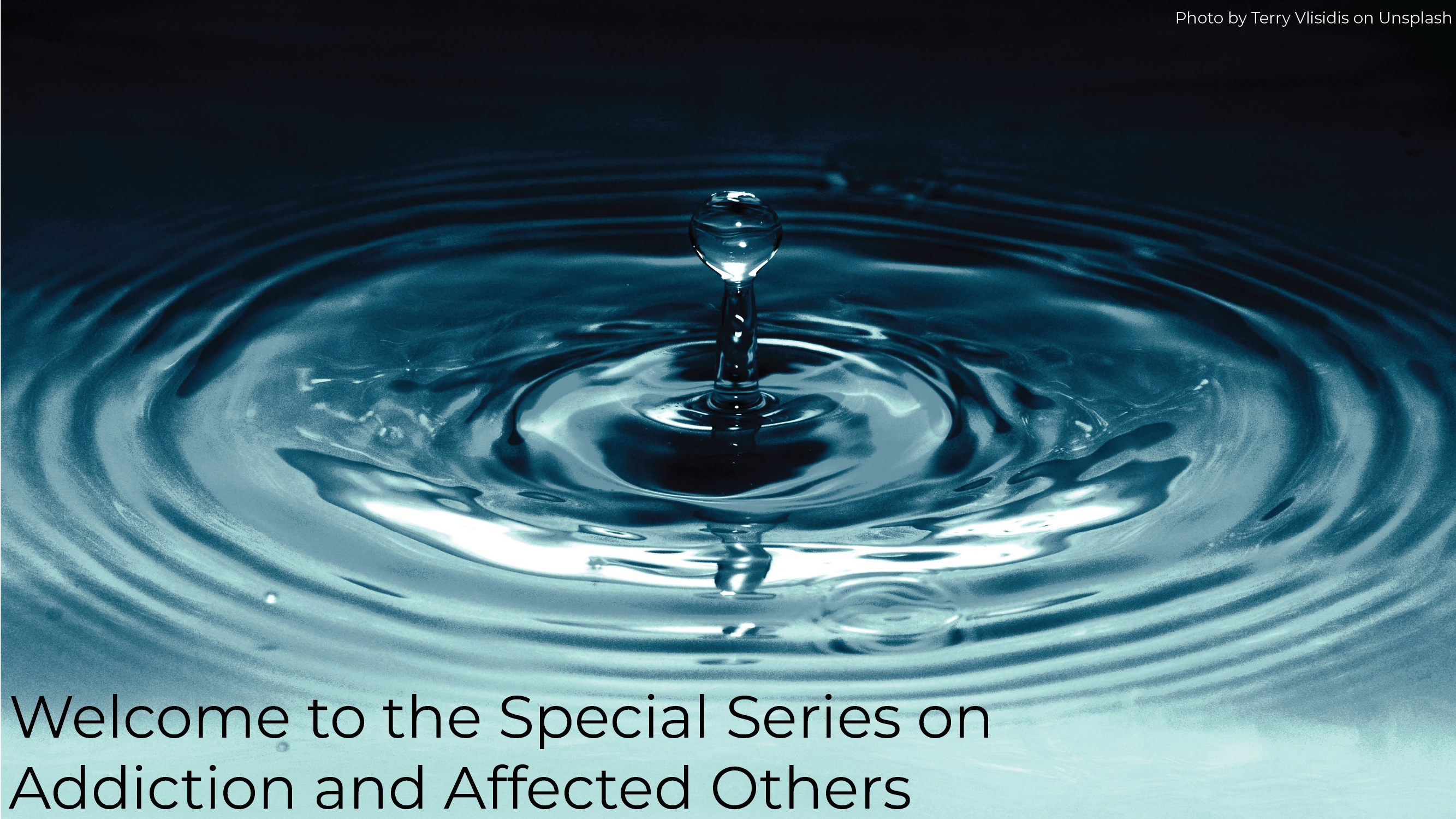 Like a stone dropped into a pond, one person’s addiction can send ripples through the lives of those around them. These affected are most often family members such as children, parents, or partners, but can also be close friends or anyone with a meaningful relationship with the person experiencing addiction. The Stress-Strain-Coping-Support model offers a framework for understanding affected others’ experiences.
The model begins with stress, or the difficult circumstances that can arise from a loved one’s addiction. Addiction can stress relationships, erode trust, and leave affected others feeling hurt or disconnected. It can also bring added responsibilities and financial pressures, along with persistent worry about a loved one’s health and safety and uncertainty about the future.
When stress persists, it can contribute to strain, or the toll on affected others’ health and well-being. The ongoing emotional demands can leave them feeling anxious, overwhelmed, helpless, or exhausted. They may find it difficult to relax, concentrate, or attend to their own needs. Over time, this strain can affect their mental and physical health.
Coping refers to how affected others respond to and manage the stress associated with a loved one’s addiction. Some may try to change their loved one’s behavior or put their loved one’s needs ahead of their own. Others may tolerate difficult situations to avoid conflict or set boundaries and create distance to protect themselves.
Support can help affected others manage stress and its effects on their well-being. Friends and family, peer groups, health professionals, and other services can offer emotional support, practical help, and reliable information. Access to these resources may make it easier to navigate difficult circumstances and manage their effects.
Just as people experiencing addiction have their own paths toward recovery, so do the people affected by their addiction. For affected others, recovery can involve making sense of their experiences, caring for their own well-being, and accessing resources to help them move forward. Resources designed specifically for affected others can offer guidance on navigating these experiences and prioritizing their own needs. One example is Taking Steps for Self-Care: A Problem Gambling Resource for Affected Others, developed by the Massachusetts Department of Public Health’s Office of Problem Gambling Services. Because the effects of a loved one’s addiction can be long-lasting, recovery may take time, and affected others may need support at different points along the way.
In our month-long Special Series on Addiction and Affected Others, we bring together personal stories, professional perspectives, and recent scientific research. Four op-eds and four science reviews explore the challenges affected others face, how they navigate them, and what can help protect their well-being.
In our first op-ed, Dr. Deborah Haskins, a retired counselor educator and President Emerita of the Maryland Council on Problem Gambling, draws on her professional experience and perspective as an affected other. She explores why gambling-related harm needs to be understood as a family and community issue and calls for research, services, and public health approaches that recognize the harms experienced by affected others and improve the support available to them.
Next, I reflect on my own experience as an affected other, sharing tools and perspectives that have helped me navigate a loved one’s addiction. My op-ed explores the challenge of caring about someone with an addiction while recognizing what is and isn’t within your control.
In our third op-ed, Linda Uphoff, Vice President of Parents Standing Together, draws on her experience as an affected parent and her professional work to discuss the importance of support for parents navigating a child’s gambling. She also reflects on how the need for support and connection has shaped her work with Parents Standing Together.
We conclude with an op-ed by Kerry L., who reflects on her experience navigating a loved one’s ongoing addiction while working through her own recovery. She describes how these two recoveries influence one another and how she has learned to navigate the challenges of being an affected other while protecting her well-being and continuing to grow in her recovery.
In addition to these op-eds, we will feature four science reviews exploring the challenges, support needs, and experiences of affected others. We begin with a DRAM review factors that predict Al-Anon attendance and involvement for people who have a loved one in residential treatment for alcohol use disorder. Next, an ASHES review describes how family members of people with lung cancer experience stigma, including judgment related to smoking and stigma by association. On STASH, we review a study on the stress family carers experience when a loved one is at risk of or has died from an overdose, including challenges related to the unregulated drug supply and navigating healthcare and substance use services. Lastly, The WAGER considers how affected others respond to a loved one’s gambling and the strategies they use to protect their own well-being.
We hope this Special Series offers new perspectives on the experiences of affected others and the support they may need. Recognizing the impact of addiction on families and communities is an important part of building more responsive systems of care and recovery that consider not only people experiencing addiction, but also those whose lives are touched by it.
– Kira Landauer, MPH, Community Health Educator Supervisor, Division on Addiction at Cambridge Health Alliance
Want CE credit for reading BASIS articles? Click here to visit our Courses Website and access our free online courses.