The WAGER, Vol. 31(10) – How often do people drink while gambling? A look at sports and non-sports gamblers
Sports betting has expanded across the U.S., becoming part of the way many people engage with and experience sports. At the same time, research has linked sports gambling with more frequent alcohol use, including binge drinking, as well as alcohol-related problems. These links might emerge from the tendency for sports bettors, more than other kinds of gamblers, to drink while they gamble. This week, The WAGER reviews a study by Alexander J. Connolly and colleagues that examined how often people report drinking while gambling, including whether drinking patterns differ between sports gamblers and other gamblers.
What was the research question?
Do sports gamblers and non-sports gamblers differ in how frequently they drink while gambling?
What did the researchers do?
The researchers analyzed YouGov Opinion Polling data from 1,977 U.S. adults who reported gambling in the past six months. The sample included 628 sports gamblers and 1,349 people who gambled but did not bet on sports. Participants reported how often they drank alcohol while gambling and the percentage of their gambling time during which they also drank. The researchers used chi-square tests and independent samples t-tests to compare drinking while gambling between sports gamblers and non-sports gamblers. They also used propensity score matching to create groups of sports and non-sports gamblers with similar demographic characteristics, problem gambling severity, and frequencies of gambling and drinking (as separate activities), then examined whether differences in drinking while gambling remained between the two groups.
What did they find?
Sports gamblers reported drinking while gambling more frequently than people who gambled but did not bet on sports (see Figure). This difference remained statistically significant after the groups were matched on demographics, problem gambling severity, and frequencies of gambling and drinking. Sports gamblers reported drinking during about 39% of their gambling time, compared with 33% among non-sports gamblers. However, the difference in the percent of time spent gambling was small and was no longer statistically significant after the groups were matched.
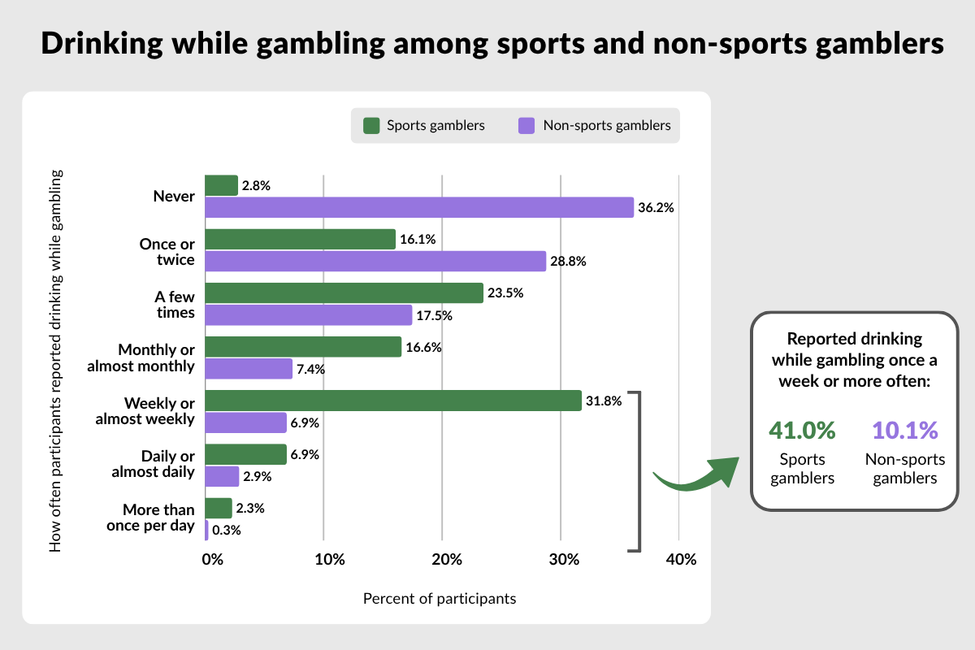
Figure. Frequency of drinking while gambling among sports gamblers and non-sports gamblers. Click image to enlarge.
Why do these findings matter?
These findings highlight that the relationship between sports gambling and alcohol use may extend beyond people engaging in both behaviors separately. For sports gamblers, drinking may be part of the gambling experience itself. As sports betting continues to expand, understanding when and how these behaviors overlap could help prevention specialists identify and address risks associated with gambling and alcohol use. For example, safer gambling education could encourage people to consider how alcohol may affect their gambling decisions and to avoid gambling while drinking.
Every study has limitations. What are the limitations in this study?
The study relied on participants’ reports of past gambling and drinking behaviors, which may be affected by recall bias. This was a cross-sectional study, so it cannot establish whether sports gambling and drinking while gambling influence each other. In addition, the researchers asked about drinking while gambling generally, so they could not determine whether sports gamblers were specifically drinking while betting on sports.
For more information:
Visit the GameSense website for responsible gambling information and resources. Individuals who are concerned about their own or someone else’s gambling may benefit from visiting the National Council on Problem Gambling. For additional resources, including gambling and self-help tools, visit our Addiction Resources page.
— Kira Landauer, MPH
Want CE credit for reading BASIS articles? Click here to visit our Courses Website and access our free online courses.