The DRAM, Vol. 22(8) – What rural veterans experience when receiving care for alcohol-related problems
Alcohol use disorder (AUD) disproportionately affects veterans in the United States, with about 40% of them meeting the criteria for a lifetime diagnosis. Living in a rural environment further exacerbates the burden of AUD due to the limited availability of healthcare facilities, geographic barriers, and social or cultural characteristics that may promote higher alcohol consumption. As a result, it is crucial to understand how rural veterans who are at high risk for harm experience treatment for alcohol-related problems. This week, The DRAM reviews a study by Tony Pomales and colleagues that explored the experiences of rural veterans who received care for alcohol withdrawal symptoms (AWS) and AUD.
What was the research question?
What are the barriers and facilitators to AWS and subsequent AUD care for rural veterans?
What did the researchers do?
The researchers interviewed 16 veterans with an inpatient admission for AWS at one of two participating rural Midwest Veteran Affairs (VA) hospitals from January 2022 to April 2024 about their experiences when seeking care for AUD. They then used thematic analysis to identify common themes among participants.
What did they find?
The researchers identified a total of eight themes (see Figure).
The first two themes related to participants’ views on alcohol use:
1. Perceived unmet need: using alcohol to treat pain and cope with trauma and co-occurring mental health symptoms describes using alcohol as a coping mechanism for chronic pain and/or mental health problems like PTSD—both of which were often described as a result of military service.
2. Factors influencing hospital admission and need for additional treatment services describes severe presentations of AWS as a major factor influencing one’s hospital admission.
Next, four themes related to perceived barriers:
3. Limited, uneven distribution of hospitals describes the geographic challenges of accessing healthcare in rural areas where hospital distribution is scarce or uneven.
4. Perceived premature discharge from inpatient AWS treatment describes patient dissatisfaction and sometimes negative health outcomes as a result of mismatched priorities between patient and provider wherein patients felt they were rushed out or that their AWS were not fully treated.
5. Perceived discriminatory treatment and stigma about AUD describes feelings of stigma felt by patients from their healthcare providers for having to receive AUD treatment.
6. Shortage of VA residential rehabilitation treatment programs describes the lack of opportunity for additional treatment services due to geographic challenges and long wait times.
The final two themes related to perceived facilitators:
7. Clinician support describes positive experiences with clinicians who showed attentiveness and empathy.
8. Veteran/peer and spousal/family support describes social support as playing an important role in participants’ recovery journeys.
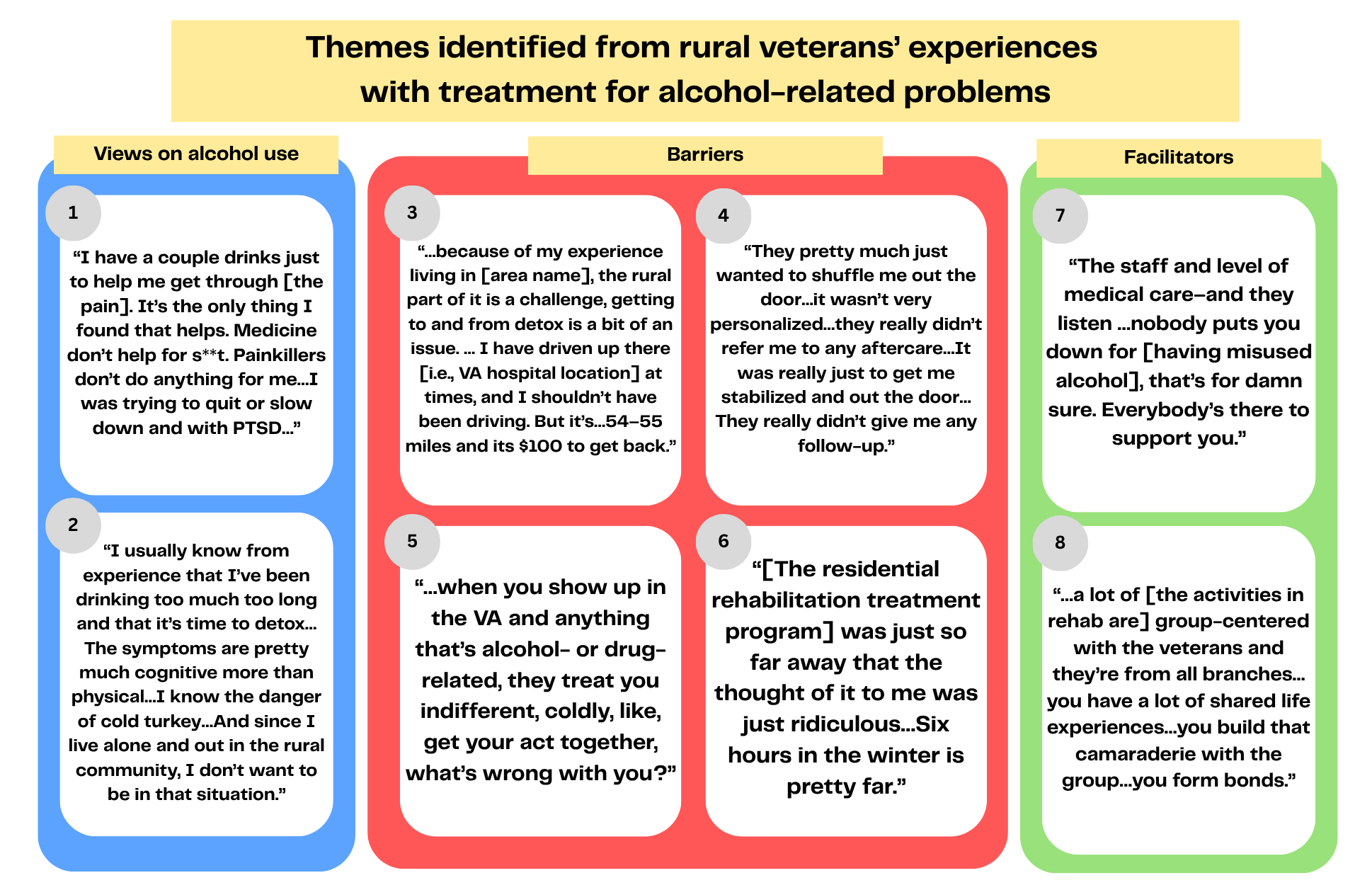
Figure. Select quotes from each theme identified by researchers, categorized by overall topic: views on alcohol use, barriers, and facilitators. Click image to enlarge.
Why do these findings matter?
These findings highlight several ways to improve healthcare delivery for rural veterans experiencing alcohol-related problems. Interventions aimed at reducing stigma among clinicians—such as through workplace anti-stigma awareness campaigns, specialized trainings, and reviews of internal policies—should be implemented to create accountability among healthcare staff. To overcome difficulties in rural healthcare accessibility, dedicated transportation services bringing patients to the healthcare facility or mobile health clinics bringing healthcare services to the patient could be developed by hospital systems. These options can be used in conjunction with the promotion of telehealth among veterans to further accommodate patient schedules and reduce the number of long trips to healthcare facilities.
Every study has limitations. What are the limitations of this study?
The participants were predominantly male and all-White, which may limit generalizability of the findings to more diverse populations. Further, some participants may have had difficulties recalling their experiences accurately given that the participant interviews were conducted on a range from weeks to a year after their hospital admission.
For more information:
Veterans can receive help and treatment for AUD or other substance use disorders at their local VA medical center or clinic. Visit the National Institute on Alcohol Abuse and Alcoholism for tips and resources for people struggling with problem drinking. For additional information and drinking self-help tools, please visit our Addiction Resources page.
— Justin Huynh, MPH
Want CE credit for reading BASIS articles? Click here to visit our Courses Website and access our free online courses.