STASH, Vol. 22(6) – Loneliness and subsequent substance use in young adulthood
Loneliness is the distressing feeling that can occur when a person’s relationships do not provide the level of social connection they want or need. In 2023, the U.S. Surgeon General described loneliness as an epidemic, highlighting its harmful effects on mental and physical health, as well as its associations with substance use. This is especially relevant for young adults, who report some of the highest levels of loneliness across age groups. This week, as part of our Special Series on Addiction Among Emerging Adults, STASH reviews a study by Isaac C. Rhew and colleagues that examined whether loneliness in young adulthood is associated with subsequent cannabis and alcohol use and related problems.
What was the research question?
Is loneliness associated with subsequent cannabis and alcohol use and related problems in young adulthood?
What did the researchers do?
The researchers analyzed data from 4,407 young adults in the longitudinal Community Youth Development Study. Participants were recruited in 2003 as fifth-grade students from public schools in small towns across the U.S. They completed repeated surveys across multiple study waves, from early adolescence into young adulthood. This analysis focused on data collected when participants were ages 21, 23, and 26. At ages 21 and 23, participants reported how often they experienced loneliness (e.g., lacking companionship or feeling left out). At ages 23 and 26, they reported past-month cannabis and alcohol use and were assessed for cannabis use disorder and hazardous alcohol use. The researchers used marginal structural modeling to examine the effects of loneliness at ages 21 and 23 on cannabis and alcohol use outcomes at ages 23 and 26, while accounting for potential confounders like depressive symptoms and psychosocial characteristics.
What did they find?
Loneliness at ages 21 and 23 was associated with greater cannabis use frequency at ages 23 and 26, but was not associated with later alcohol use frequency. Loneliness was also associated with subsequent substance-related problems. Specifically, each 1 standard deviation increase in loneliness was associated with higher likelihoods of both cannabis use disorder (21% higher) and hazardous alcohol use (10% higher) two years later. As loneliness scores increased, the predicted probabilities for cannabis and alcohol use problems at the next assessment also increased (see Figure).
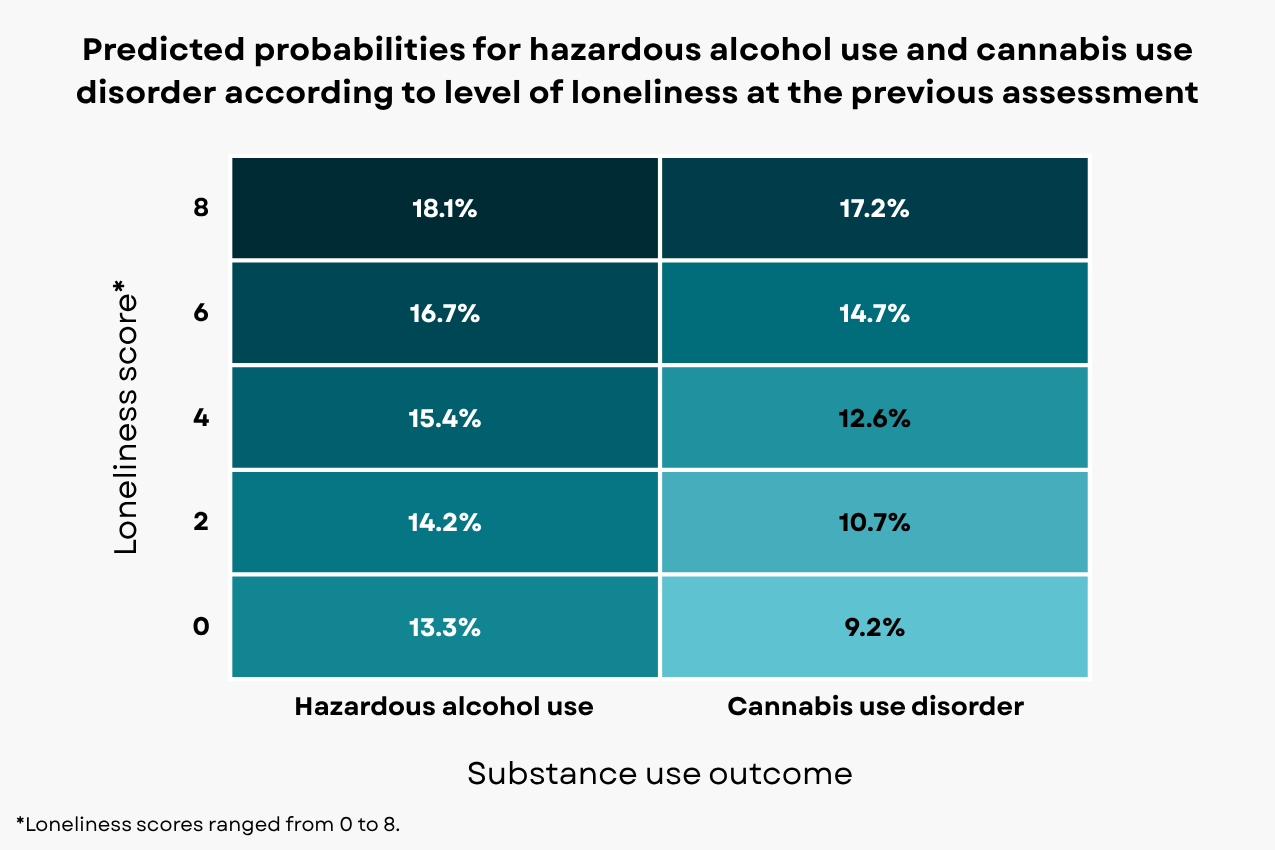
Figure. Predicted probabilities of hazardous alcohol use and cannabis use disorder according to level of loneliness (scale of 0–8) at the previous assessment. Click image to enlarge.
Why do these findings matter?
Technology has made it easier than ever to stay connected through tools like texting and social media, but it has also been described as a potential “recipe for loneliness.” People today, particularly young adults, are having fewer face-to-face interactions and spending more time alone. The present study suggests that loneliness in young adulthood may be associated with later cannabis use and related problems. One possible explanation is that cannabis use may be a coping strategy for managing stress or distress, including that stemming from loneliness. These findings highlight the importance of addressing loneliness in substance use prevention efforts. Approaches that strengthen meaningful social connection, particularly in settings such as college campuses, may be especially relevant. Interventions targeting cannabis use problems could incorporate strategies that address social disconnection, including building social and emotional skills and promoting healthy coping strategies for managing loneliness.
Every study has limitations. What are the limitations of this study?
Participants were from small towns and were predominantly White, so the results may not generalize to more diverse young adult populations. Although the analyses accounted for a range of confounding variables, it is possible that unmeasured factors influenced the results.
For more information:
If you are worried that you or someone you know is experiencing addiction, the SAMHSA National Helpline is a free treatment and information service available 24/7. For additional general resources and tools, please visit the BASIS Addiction Resources page.
— Kira Landauer, MPH
Want CE credit for reading BASIS articles? Click here to visit our Courses Website and access our free online courses.