The DRAM, Vol. 21(13) – Experiences with and motivations for attending online mutual support meetings for alcohol use
Mutual support groups are a low-barrier, non-clinical option for people seeking to reduce or stop drinking. Programs like Alcoholics Anonymous allow peers to connect and support one another in achieving and maintaining sobriety, and have been shown to be effective in supporting abstinence. While mutual support meetings have been traditionally held in person, they are now increasingly available online. This week, The DRAM reviews a study by Jessica L. Sousa and colleagues that examined the experiences of people who attend online mutual support group meetings for problematic drinking.
What were the research questions?
(1) Are there distinct types of people who attend online mutual support group meetings for problematic alcohol use? (2) What characteristics distinguish them in terms of their motivations for attending and their meeting format preferences (online versus in person)?
What did the researchers do?
The researchers recruited 20 adults living in the U.S. from a nationwide online research panel in 2024. Participants had a history of attending mutual support groups for problematic drinking and had participated in at least one online meeting in the past two years. They completed semi-structured interviews about their experiences with online meetings, including perceived benefits and disadvantages. The researchers conducted an ideal-type analysis to identify distinct types of participants with similar motivations for attending online meetings and meeting format preferences.
What did they find?
The researchers identified four distinct types of online mutual support group meeting users (see Figure):
- Meeting Maximizers preferred in-person meetings but attended online meetings to supplement the in-person ones. They valued the convenience of online meetings and used them to maintain consistent overall attendance.
- Strategists preferred a mix of online and in-person meetings. To them, online meetings offer distinct benefits, such as providing new ideas, diverse perspectives, and urgent support when needed.
- Online Enthusiasts preferred online meetings because they offer additional anonymity, less social pressure, and are a low-risk, low-commitment way to access support.
- Compliance Seekers relied almost entirely on online meetings as a convenient means of meeting court-mandated attendance requirements.
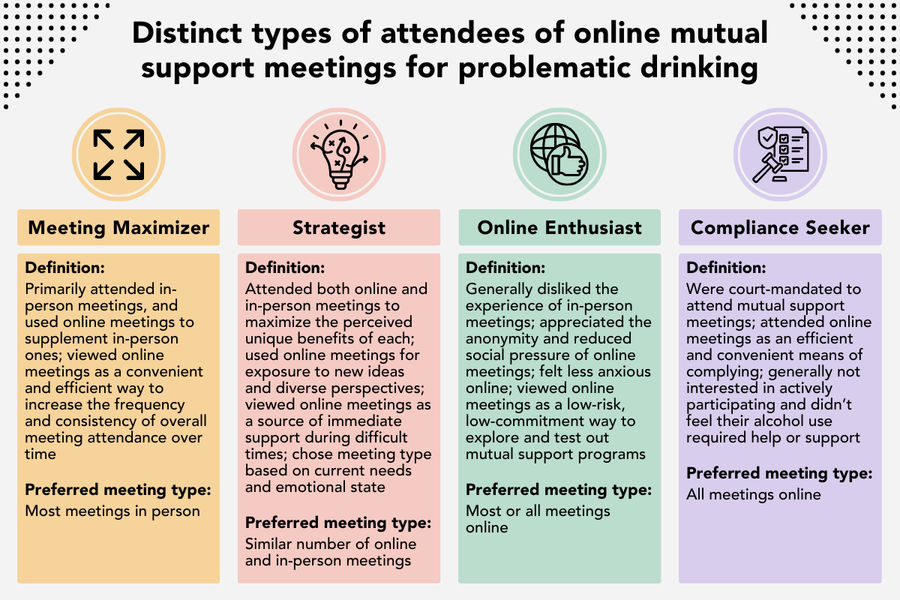
Figure. Four distinct types of attendees of online mutual support meetings for problematic drinking. Click image to enlarge.
Why do these findings matter?
Online mutual support groups are becoming more widespread, with most Alcoholics Anonymous attendees having participated in an online meeting. This study highlights the unique advantages of online meetings and suggests that people use them for different reasons. These findings can inform the intentional design of online meetings that support engagement and participation. For example, online meetings could offer additional opportunities for peer interaction (e.g., breakout rooms) to appeal to Meeting Maximizers and Strategists who value the sense of community and connection that in-person meetings provide. Meetings that emphasize anonymity and additional privacy protections (e.g., passcodes) could appeal to Online Enthusiasts and Compliance Seekers.
Every study has limitations. What are the limitations in this study?
Most participants (75%) had attended Alcoholics Anonymous, so findings may not generalize to other peer support groups with different structures (e.g., SMART Recovery). Many participants also used additional alcohol-related supports (e.g., psychotherapy or medication), further limiting generalizability. Finally, this study did not assess the effectiveness of online mutual support; future research should compare outcomes of online and in-person mutual support.
For more information:
The National Institute on Alcohol Abuse and Alcoholism has tips and resources for people struggling with problem drinking. For additional information and drinking self-help tools, please visit our Addiction Resources page.
— Kira Landauer, MPH
Want CE credit for reading BASIS articles? Click here to visit our Courses Website and access our free online courses.